
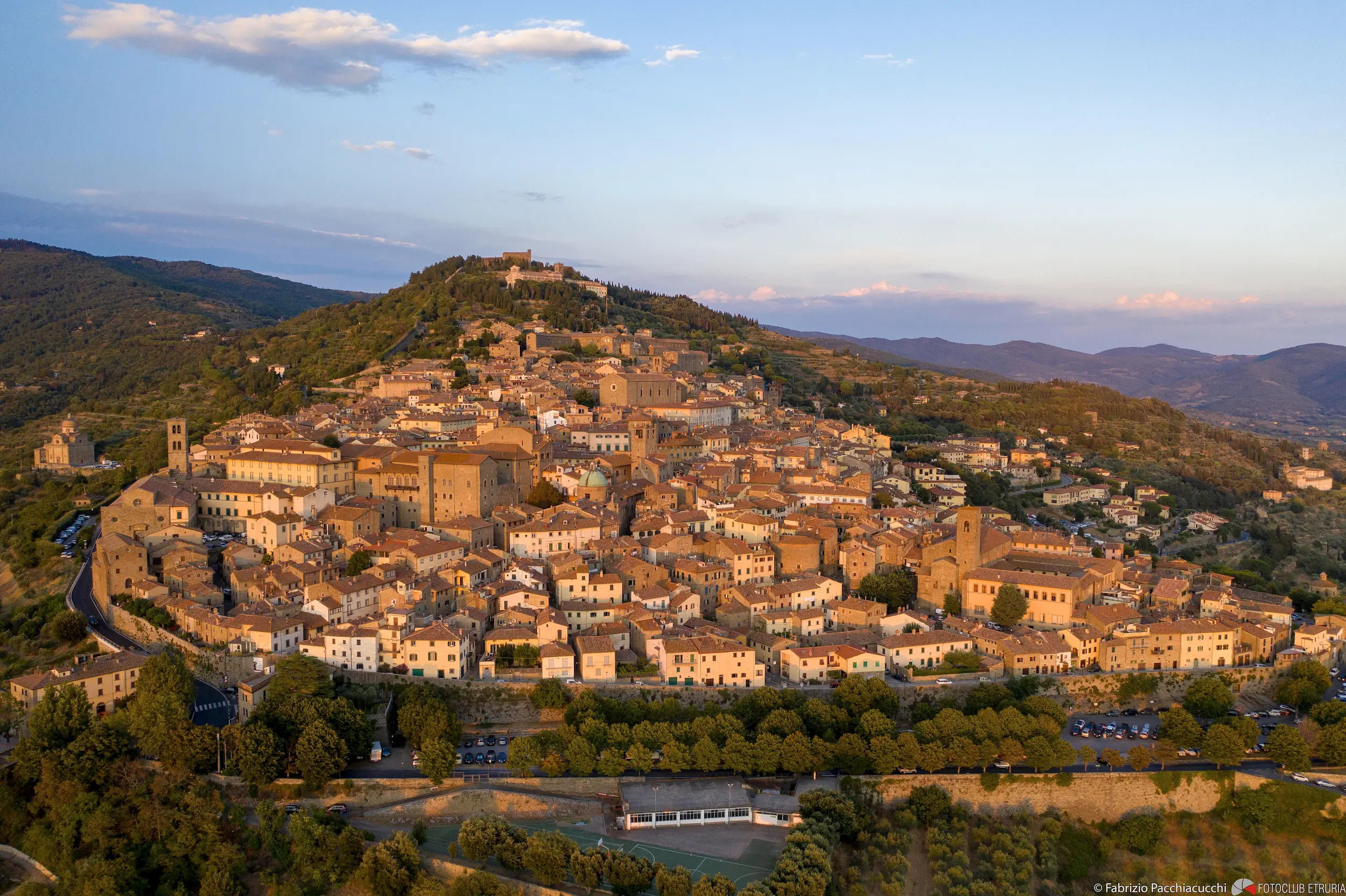
Deeply connected to Cortona, his birthplace, Luca Signorelli returned to the city repeatedly throughout his life, leaving it only to respond to important appointments and commissions. Here he was not only active as an artist, but also played a role in public life, closely intertwining his personal and professional path with that of the Cortonese community.
This privileged relationship has left a legacy that is still clearly visible today. Cortona preserves a significant nucleus of autograph works by Signorelli, some still housed in the locations for which they were originally conceived, others now kept in the city’s museums. Masterpieces such as the Deposition in the church of San Niccolò and the Lamentation over the Dead Christ in the Museo Diocesano represent key stages of an itinerary that extends beyond individual works, embracing the many traces of Signorelli’s memory scattered throughout the city—from places associated with his life to the tributes that Cortona continues to dedicate to him over time, bearing witness to a deep and enduring bond.
Stops along the route
Diocesan Museum of Cortona
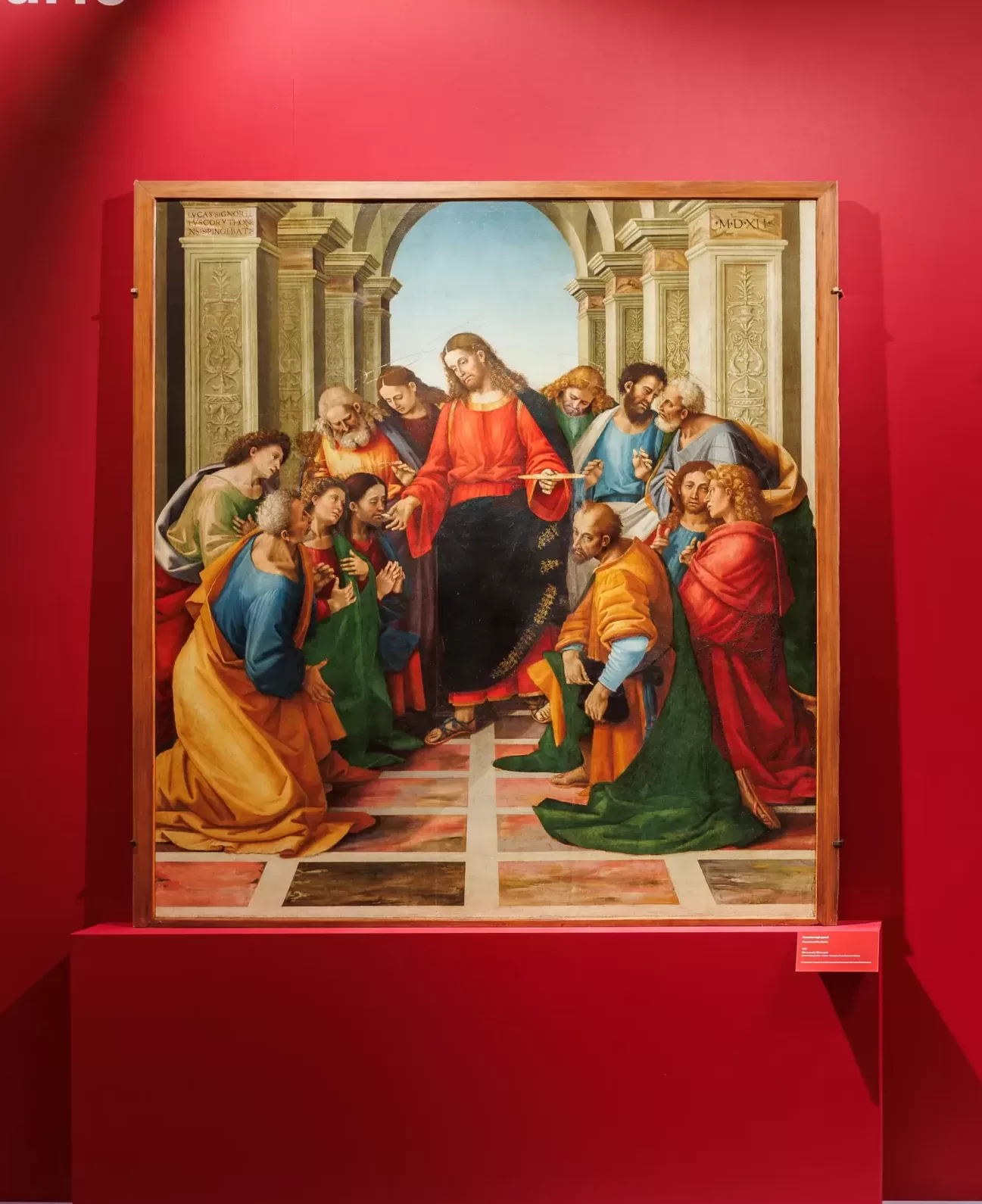
Among the Cortonese commissions entrusted to Luca Signorelli, one of the most complex and significant was that promoted by the Compagnia del Buon Gesù from 1512 onwards. The artist was commissioned to decorate the upper church of the confraternity with an articulated pictorial cycle illustrating the key moments of Christ’s life, from the Incarnation to the institution of the Eucharist, a theme of central importance to the confraternity’s spiritual identity.
At the heart of the project was the large Communion of the Apostles, placed on the high altar, flanked by panels depicting the Immaculate Conception and the Nativity, intended for the side altars. Conceived as a unified ensemble, these works combine theological depth with extraordinary narrative power.
Today this important group of works is preserved in the Signorelli Rooms, where the paintings—no longer housed in their original church setting—enter into dialogue with other works by the artist that remained in Cortona and originate from the city’s churches and conventual complexes, offering a coherent and in-depth reading of his mature production.
MAEC
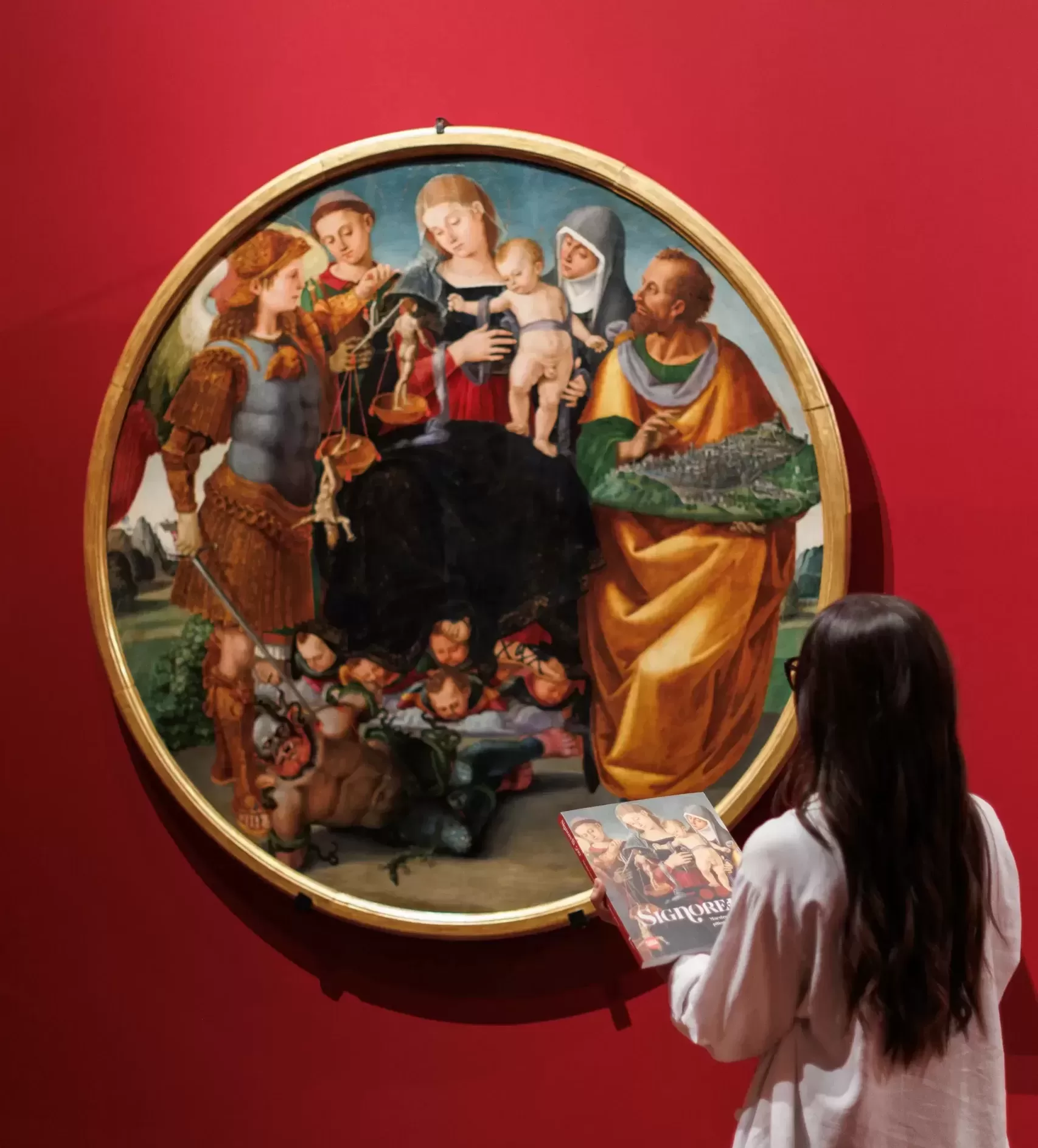
The MAEC – Museo dell’Accademia Etrusca e della Città di Cortona houses a fundamental group of works by Luca Signorelli in its permanent collection: the celebrated Signorelli Tondo, the Adoration of the Shepherds, and the two wooden panels. These masterpieces vividly express the deep bond between the artist and his native city, and allow visitors to encounter, in Cortona itself, key moments of his artistic career.
Always accessible to the public and visitable independently of the temporary exhibition programme, these works represent an essential reference point within the Cortona itinerary, creating an ideal continuity between the exhibition, the permanent collection, and the broader narrative of Signorelli’s presence in the territory.
San Niccolò
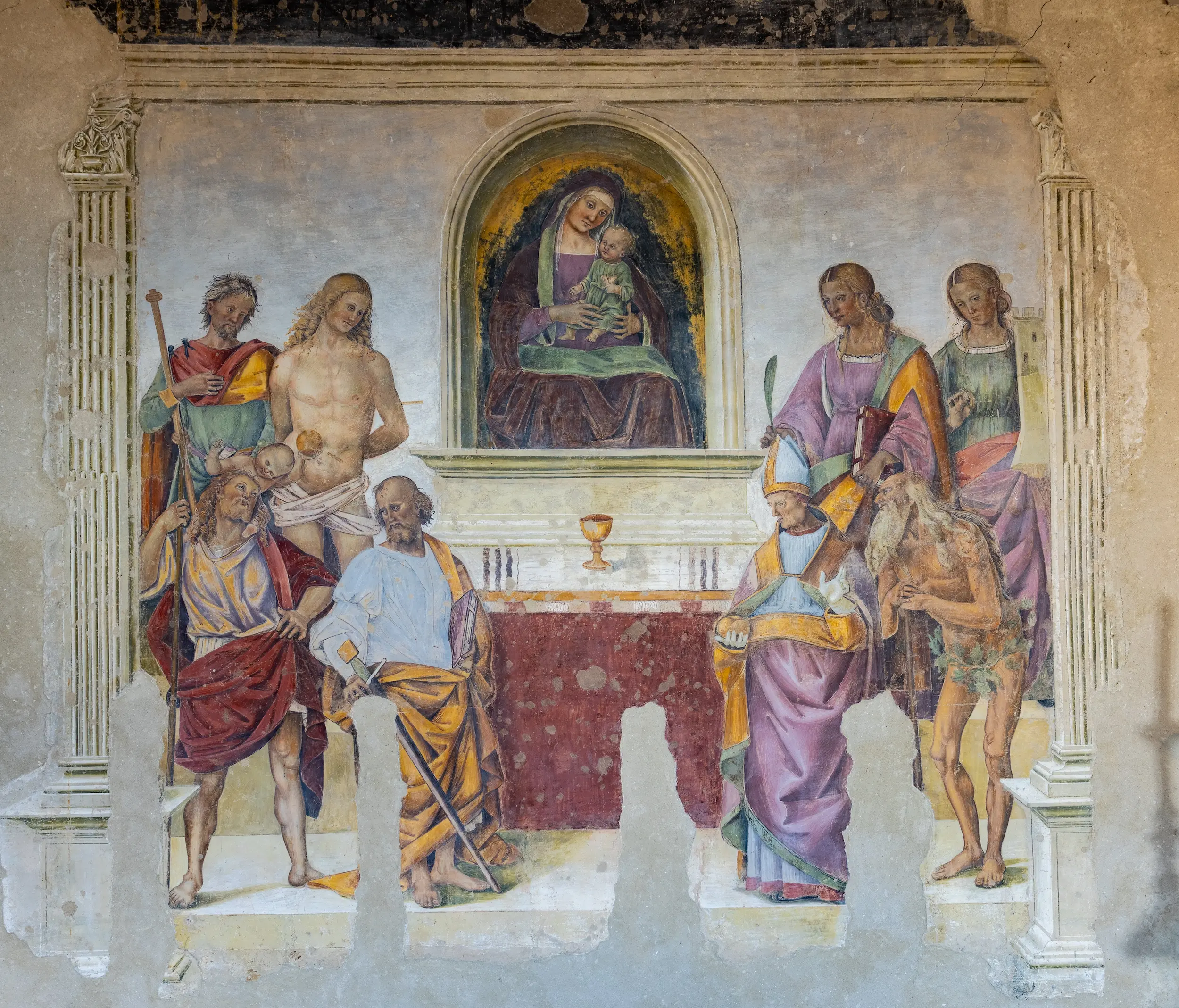
Historical sources attest to Luca Signorelli’s relationship with the Compagnia di San Niccolò, of which the artist is thought to have been a member. Within this context falls the creation, around 1510, of a distinctive double-sided painted panel intended for the church’s high altar. Although full documentary certainty is lacking, the work is already described in 1583 as “transportable,” suggesting its dual function as both an altarpiece and, when required, a processional banner.
On the principal side, the painting presents an unusually powerful composition featuring the Lamentation over the Dead Christ, surrounded by Saints Nicholas, Francis, Dominic, Michael the Archangel, and Jerome. On the reverse appears a Madonna enthroned with the Child, flanked by Saints Peter and Paul.
An additional fresco attributed to Signorelli’s workshop is preserved on the left wall of the church, further testifying to the Master’s presence and influence in this site.
San Domenico
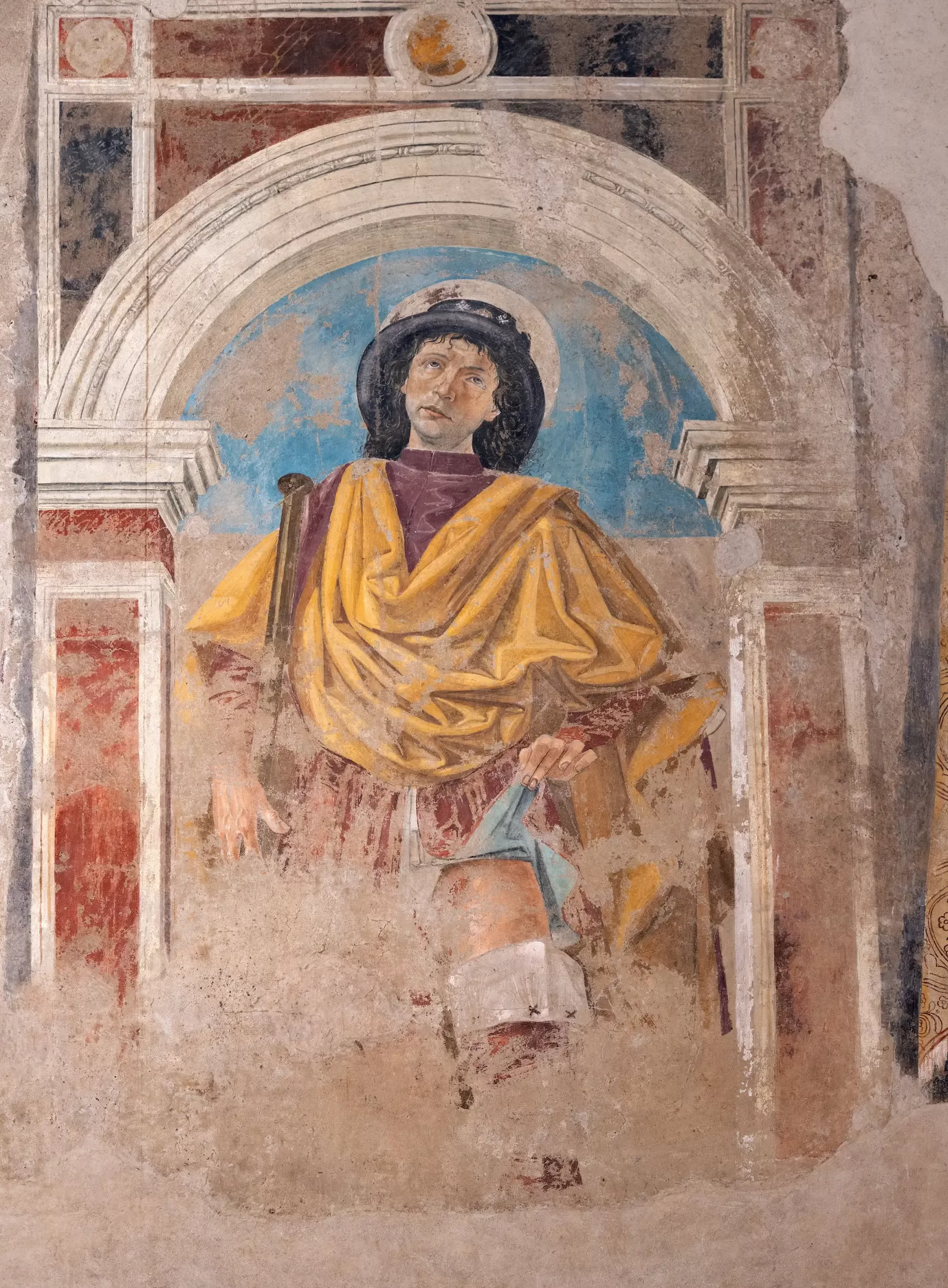
In the church of San Domenico a painted altarpiece by Luca Signorelli is preserved, depicting the Madonna and Child with Saints Dominic and Blaise (?), accompanied by two angels, together with the figure of the patron Giovanni Sernini. The work was commissioned in 1515 by Sernini for his family chapel within the church, which housed the relics of Saint Blaise, probably identifiable as the saint portrayed to the right of the Virgin.
At the time of the commission, Signorelli was already advanced in age, yet he accepted an assignment of considerable prestige, connected to one of the most prominent figures in Cortona’s ecclesiastical life. Giovanni Sernini had recently been appointed Bishop of Cortona and was Apostolic Protonotary to Pope Leo X de’ Medici. Emphasising the bond between artist and patron, Signorelli included Sernini’s portrait in the painting, recognisable in profile in the lower right section of the composition.
The Palazzone
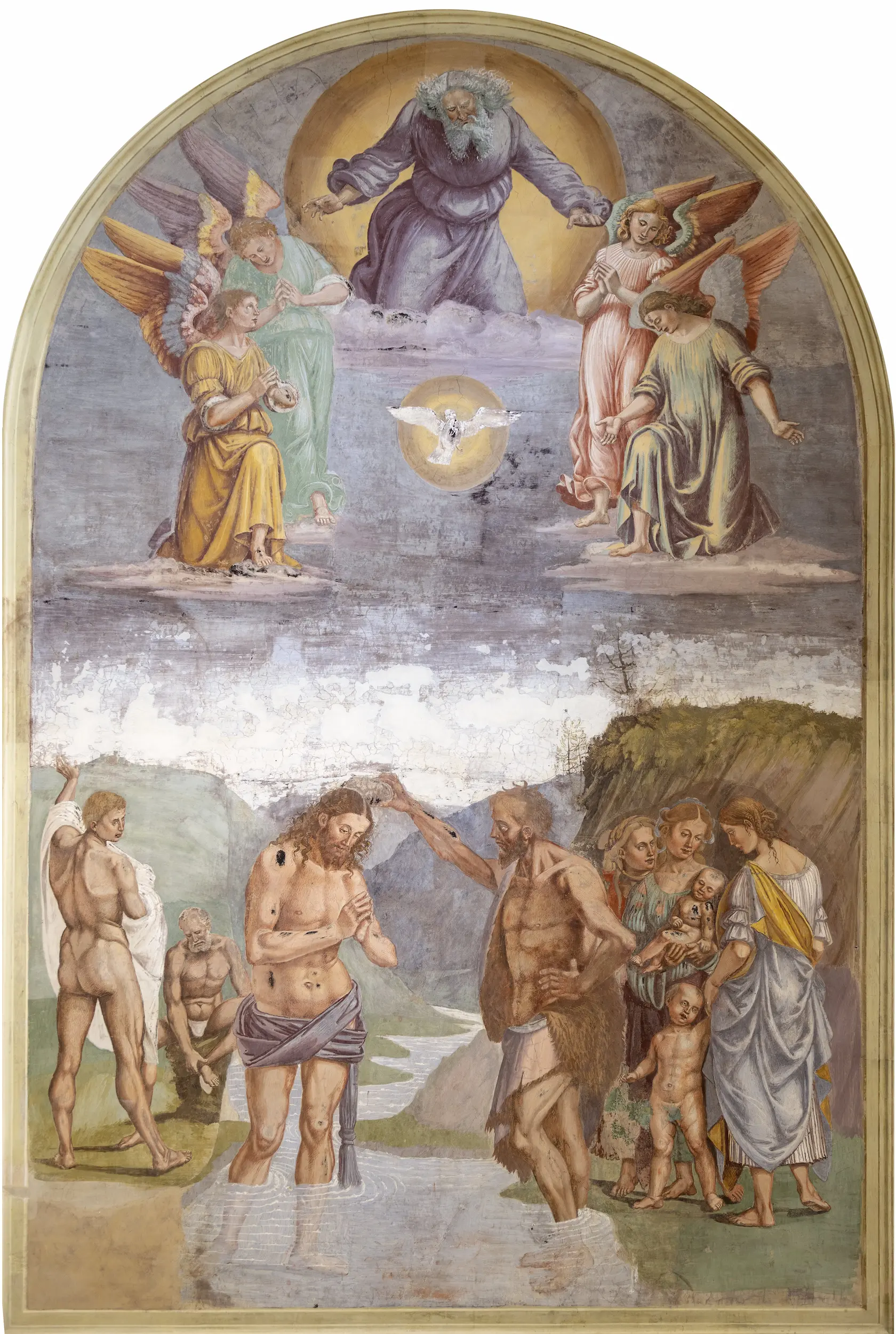
In the final years of his life, Luca Signorelli was entrusted with one last, significant commission just outside Cortona. As recorded by Vasari, Cardinal Silvio Passerini wished to enrich with a work by the Master the suburban villa he had built between 1519 and 1522 on the outskirts of the city, known as the Palazzone.
The elderly artist was commissioned to decorate the small chapel located near the entrance to the piano nobile. Here Signorelli painted the Baptism of Christ on the altar wall, accompanied above by the figure of a Sibyl, creating a dialogue between sacred history and prophecy that reflects the complexity of his mature artistic language.
The work, however, remained unfinished: according to tradition, Signorelli died while working on the frescoes, following a fall from the scaffolding. This episode symbolically links the final phase of his life to the very practice of painting, bringing the human and artistic journey of the Master to a close on the threshold of his native city.
Chruch of Santa Maria delle Grazie al Calcinaio
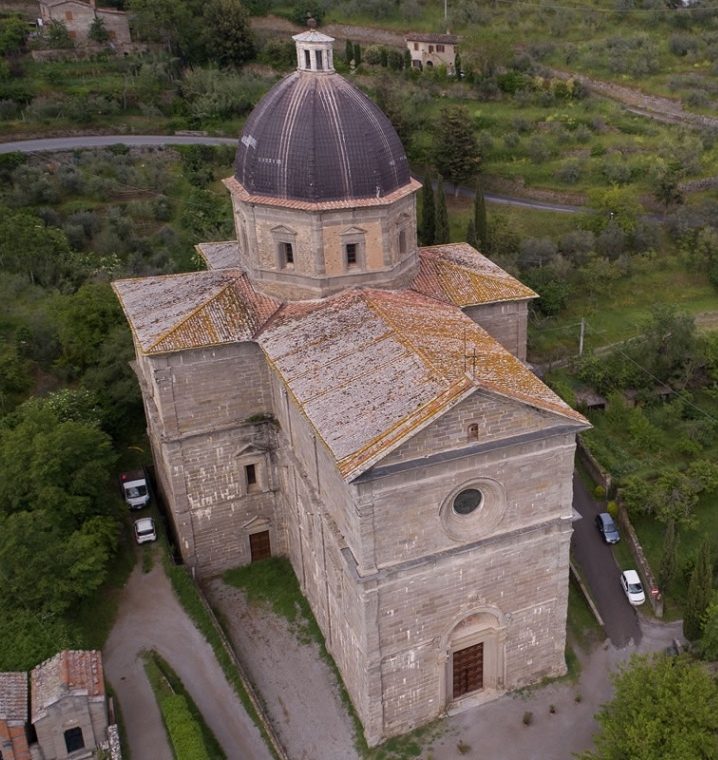
In July 1523 Giovanbattista Vagnucci commissioned Luca Signorelli to produce an altarpiece for the church of Santa Maria delle Grazie al Calcinaio, dedicated to the theme of the Immaculate Conception. The project called for the inclusion of the two patrons within the composition: Giovanbattista himself and his son Mauro, in accordance with a widespread practice in major devotional commissions of the period.
Despite his advanced age, Signorelli devised the design for a monumental Immaculate Conception with six prophets and the two patrons, now located on the third altar on the left aisle of the church. The work was intended to be completed by Easter 1524, but the artist’s sudden death interrupted its execution.
The altarpiece was subsequently finished by another painter, traditionally identified as Francesco Signorelli or the so-called Papacello, while still preserving the compositional structure conceived by the Master and standing as one of the last testimonies of his activity in Cortona.
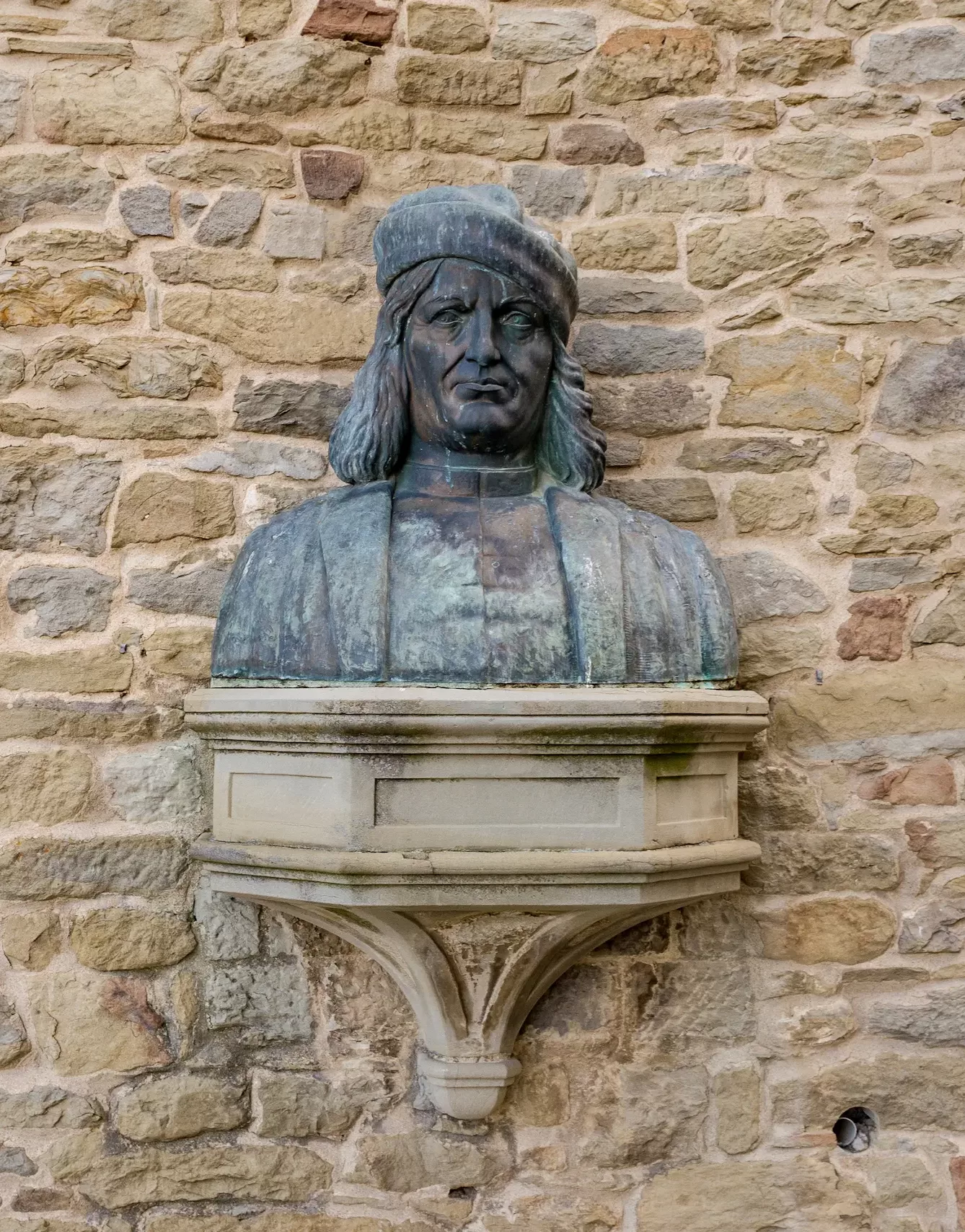
Luca Signorelli and Cortona
Luca Signorelli remained deeply rooted in Cortona throughout his life, maintaining the city as the centre of both his personal and professional existence. Here he kept his residence, held important public offices, and established the stable activity of his workshop, forging a lasting connection between his artistic career and the Cortonese community.
Traces of this enduring presence are still visible today, from the house in which he lived — a small property possibly identifiable with the present-day No. 12, Via San Marco — to his tomb, traditionally located in the family chapel within the church of San Francesco, although never conclusively identified.
For the church of San Francesco, Signorelli produced several altarpieces; those that survive are now preserved in the Diocesan Museum of Cortona. Within the convent complex, the Centro Studi Frate Elia, with the patronage of the Municipality of Cortona and the Diocese of Arezzo–Cortona–Sansepolcro, has also set up a free-access documentary exhibition in the cloister, further exploring the relationship between the artist, the city, and the historical context in which he worked.