

Warning: Undefined array key "post_card_rendering" in /home/cortonamaec/public_html/wp-content/plugins/fusion-builder/shortcodes/components/content.php on line 372
Warning: Undefined array key "is_builder" in /home/cortonamaec/public_html/wp-content/plugins/fusion-builder/shortcodes/components/content.php on line 377
From Cortona to the World’s Museums
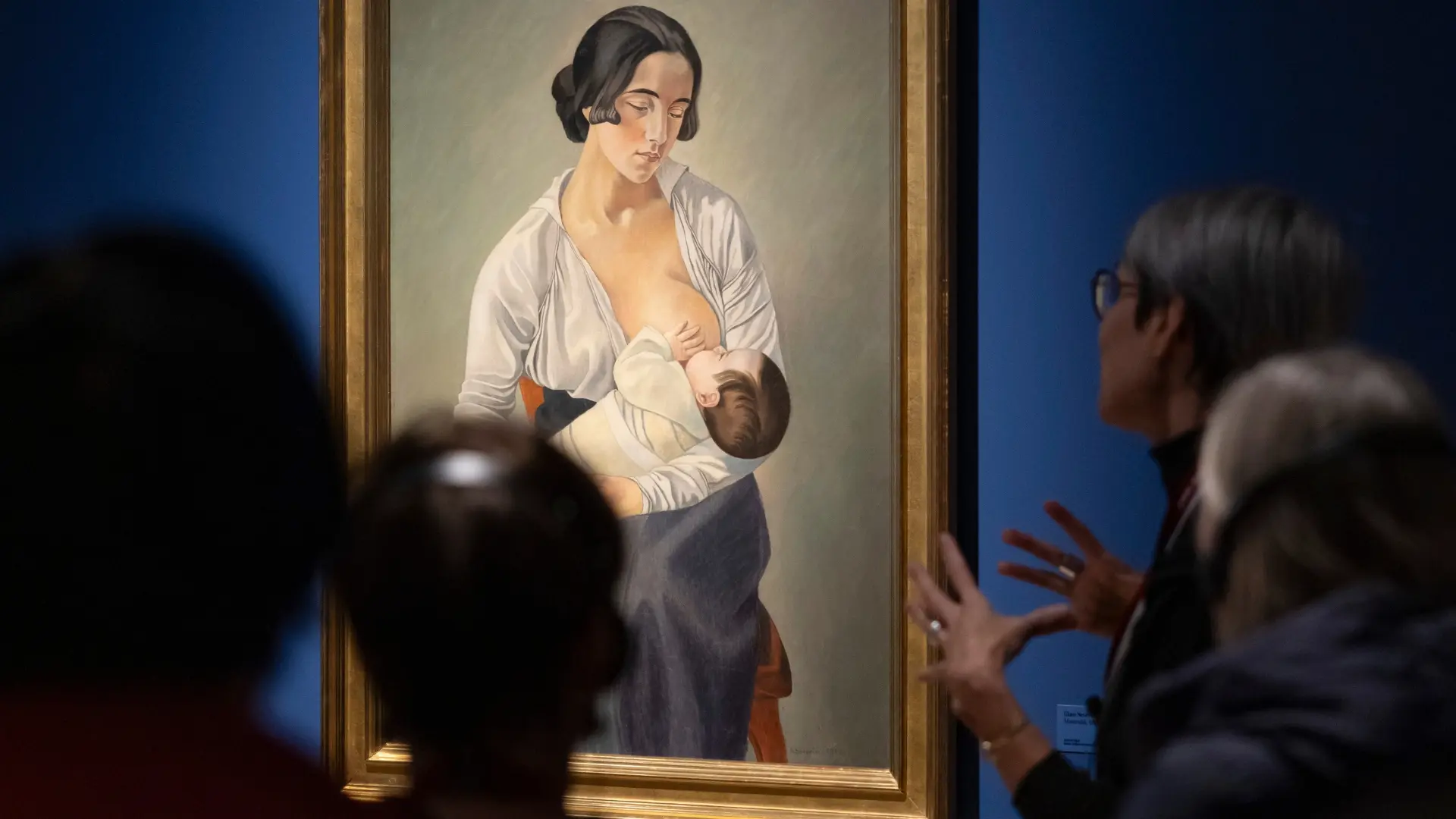
Since its first appearance in 1916, Motherhood has attracted the attention of artists and critics alike. Pablo Picasso, Marc Chagall and Guillaume Apollinaire all took a keen interest in the work, which is now regarded as one of the defining symbols of the so-called “Return to Order” movement in twentieth-century European art. It is also one of the most frequently requested and loaned paintings from the MAEC for exhibitions in Italy and abroad.
From Cortona to the World’s Museums
Museum Masterpieces
The Etruscan Lamp of Cortona, a bronze masterpiece dating to the 5th century BC, was discovered in 1840 in the locality of Fratta and acquired by the Accademia Etrusca after a long negotiation. Richly decorated with mythological motifs, it was most likely used in sacred contexts. Today it is one of the most renowned and significant works of the MAEC, an extraordinary example of Etruscan bronze craftsmanship for both its technical refinement and symbolic value.
Museum Masterpieces
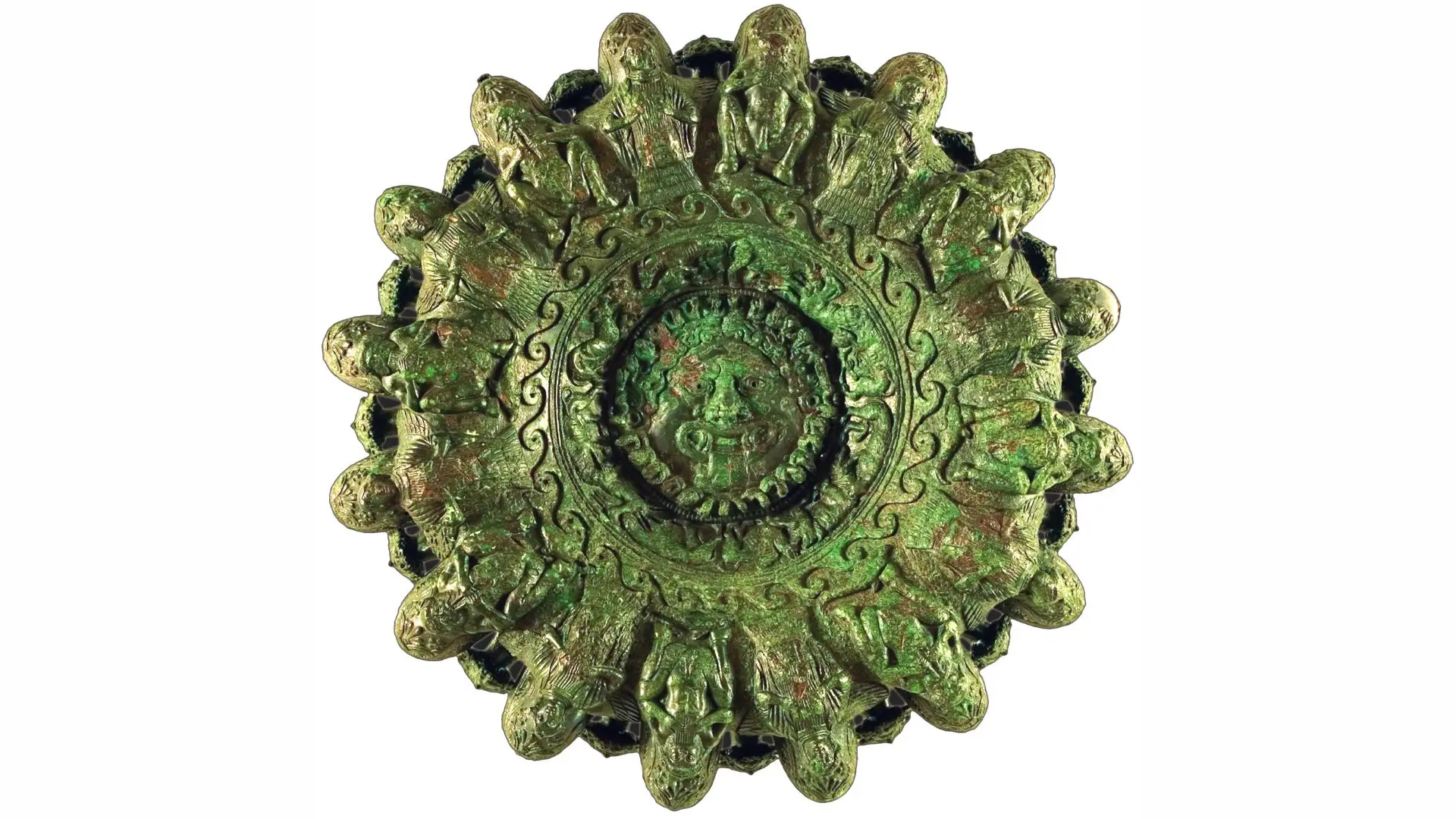
The Etruscan Lamp of Cortona, a bronze masterpiece dating to the 5th century BC, was discovered in 1840 in the locality of Fratta and acquired by the Accademia Etrusca after a long negotiation. Richly decorated with mythological motifs, it was most likely used in sacred contexts. Today it is one of the most renowned and significant works of the MAEC, an extraordinary example of Etruscan bronze craftsmanship for both its technical refinement and symbolic value.
The Etruscan temple
The Lamp was originally placed in an Etruscan temple, a sacred building dedicated to the gods, characterized by a rectangular plan and a բարձր raised access platform. Unlike Greek temples, it featured a single columned façade and often three inner cellae. Built with perishable materials such as wood and terracotta, only the stone foundations survive today. Near the Lamp, a small inscribed plaque was also discovered plaque.
The Etruscan temple
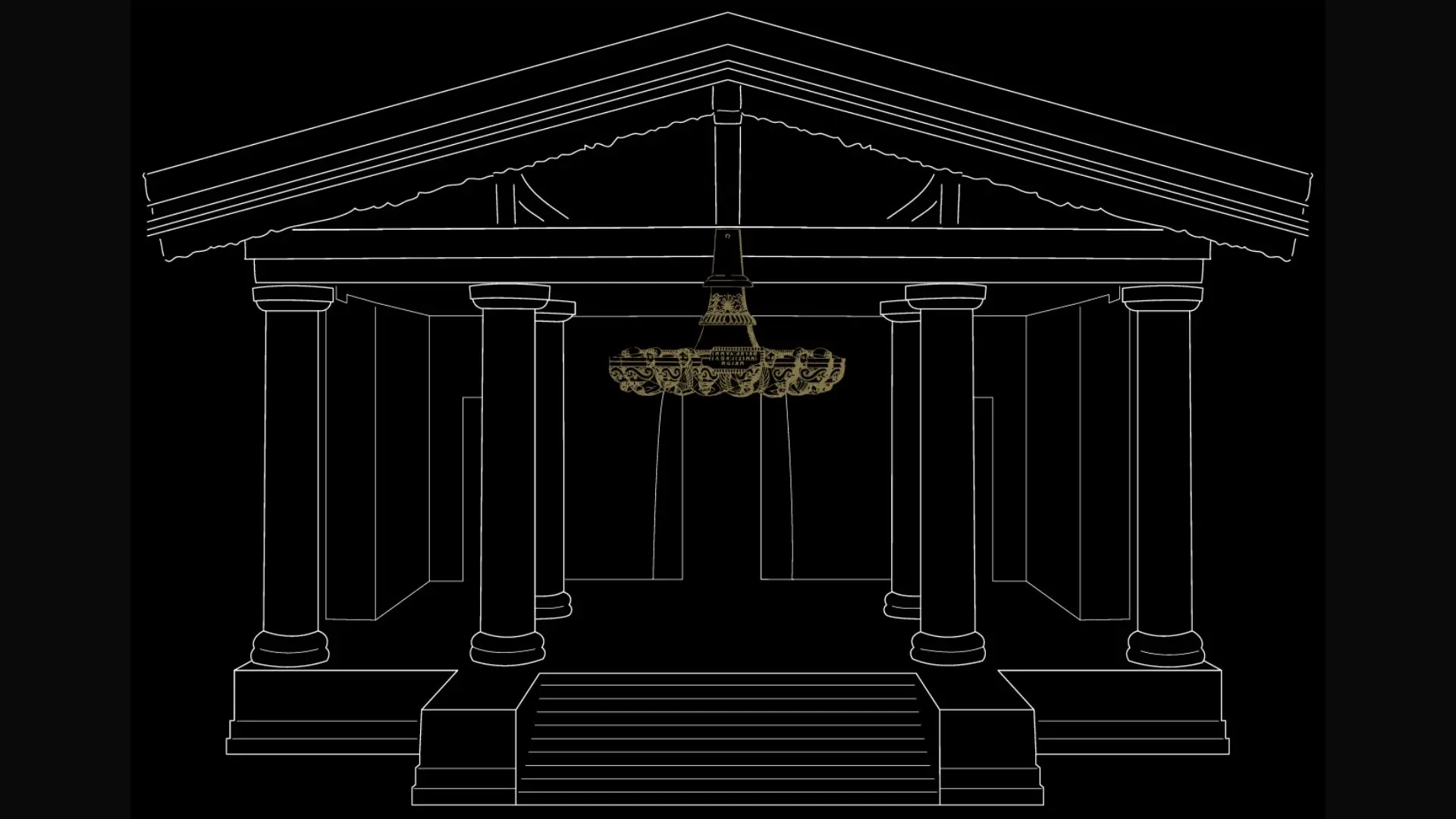
The Lamp was originally placed in an Etruscan temple, a sacred building dedicated to the gods, characterized by a rectangular plan and a բարձր raised access platform. Unlike Greek temples, it featured a single columned façade and often three inner cellae. Built with perishable materials such as wood and terracotta, only the stone foundations survive today. Near the Lamp, a small inscribed plaque was also discovered plaque.
Achelous
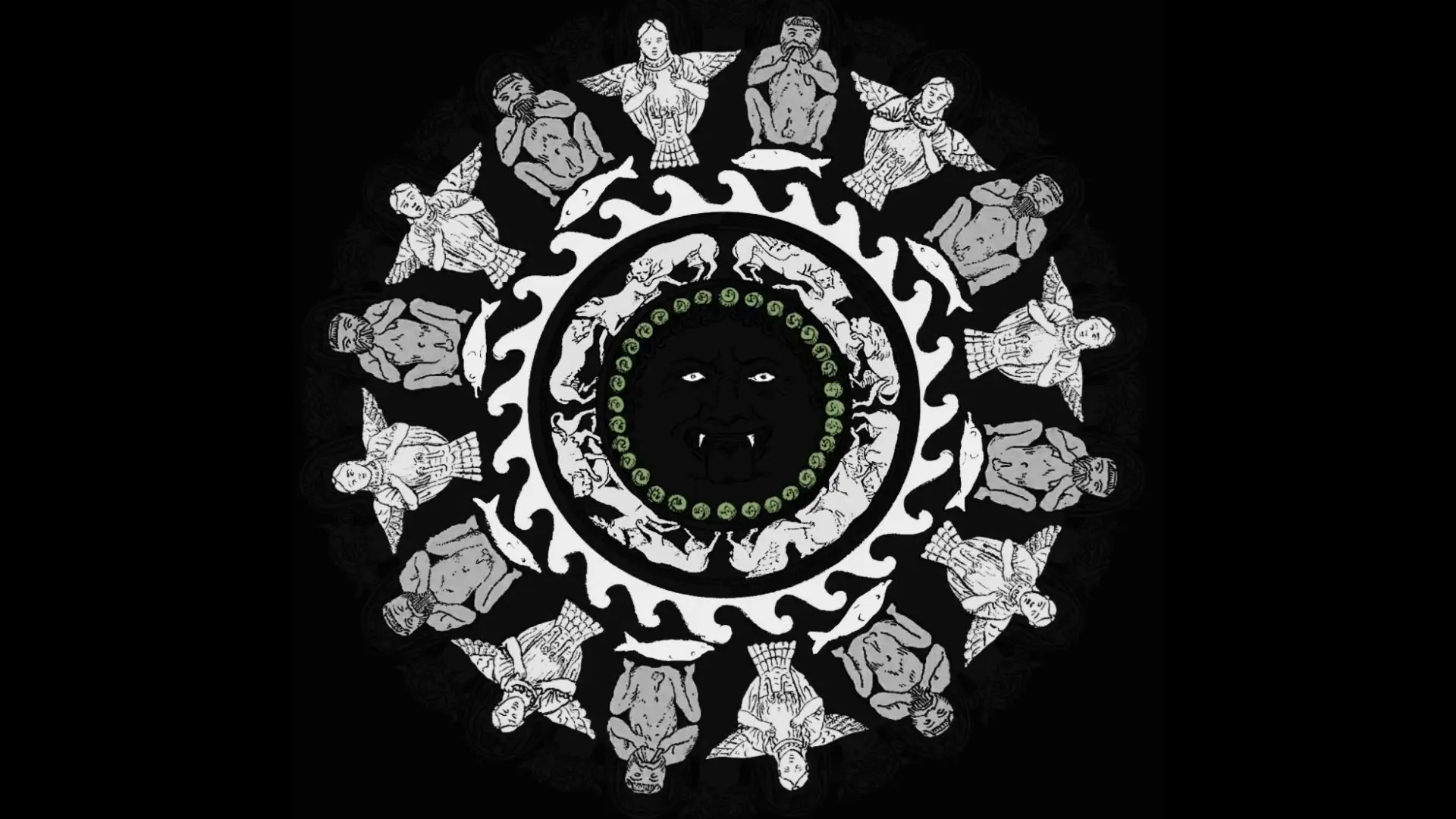
Starting from the outermost rim of the basin and moving inward, one encounters 16 protomes of Achelous alternating with 16 spouts decorated with palmettes. In Etruscan culture, Achelous symbolized the power of water and fertility, and was associated with the passage between life and death.
Achelous
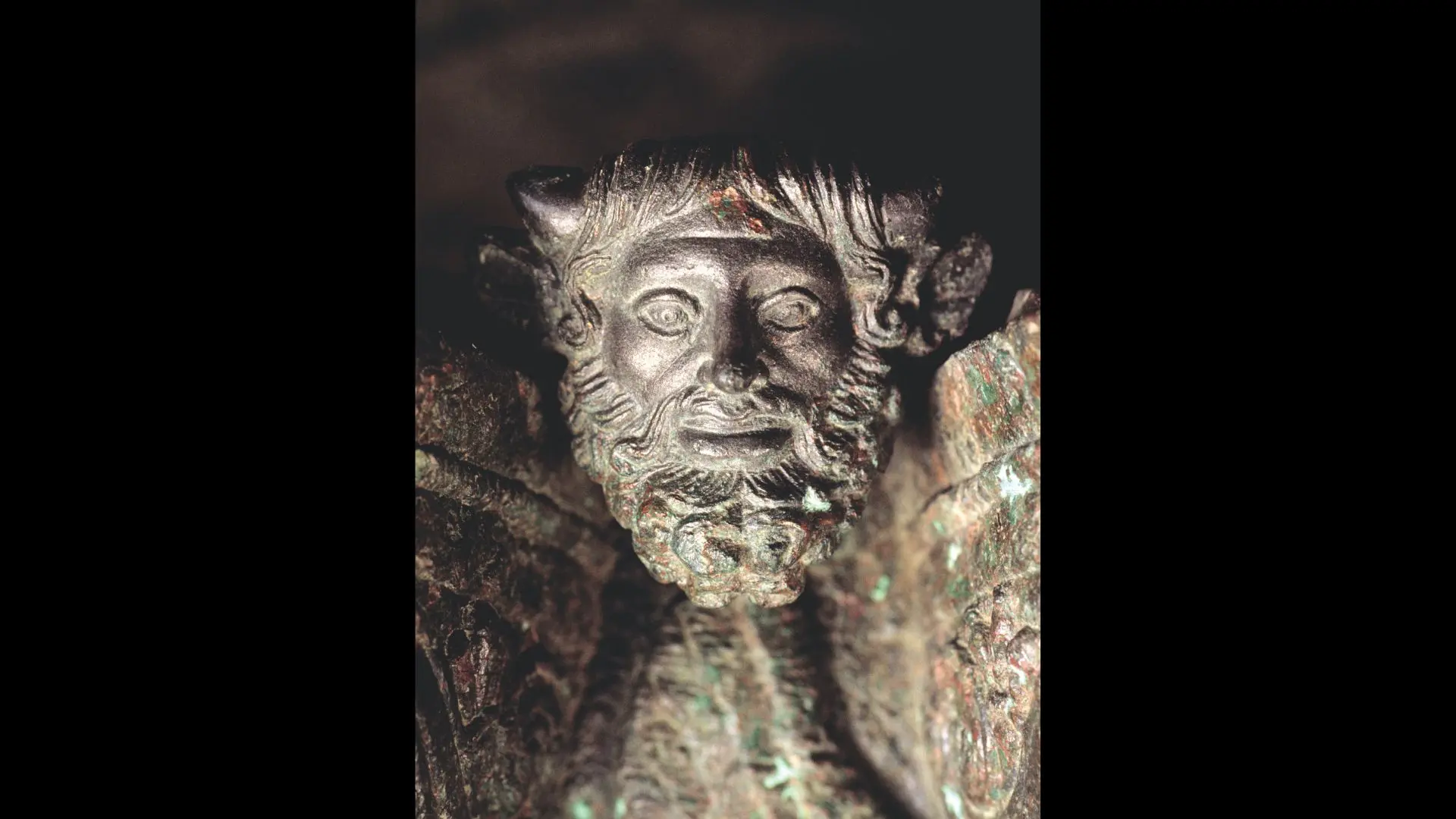
Starting from the outermost rim of the basin and moving inward, one encounters 16 protomes of Achelous alternating with 16 spouts decorated with palmettes. In Etruscan culture, Achelous symbolized the power of water and fertility, and was associated with the passage between life and death.
Sirens
Beneath each of the sixteen spouts appear eight winged sirens with outstretched wings and hands resting on their chests, each alternating with eight ithyphallic satyrs.
The sirens are traditionally charged with ambiguity: through their song they could bring joy, foretell the future, and also herald death. At the same time, they were regarded as guardians of the deceased’s memory and as guides escorting souls to the afterlife.
According to Pythagorean doctrine, the eight notes emitted by each siren together formed the harmony of the celestial spheres, themselves composed of eight heavens.
Sirens
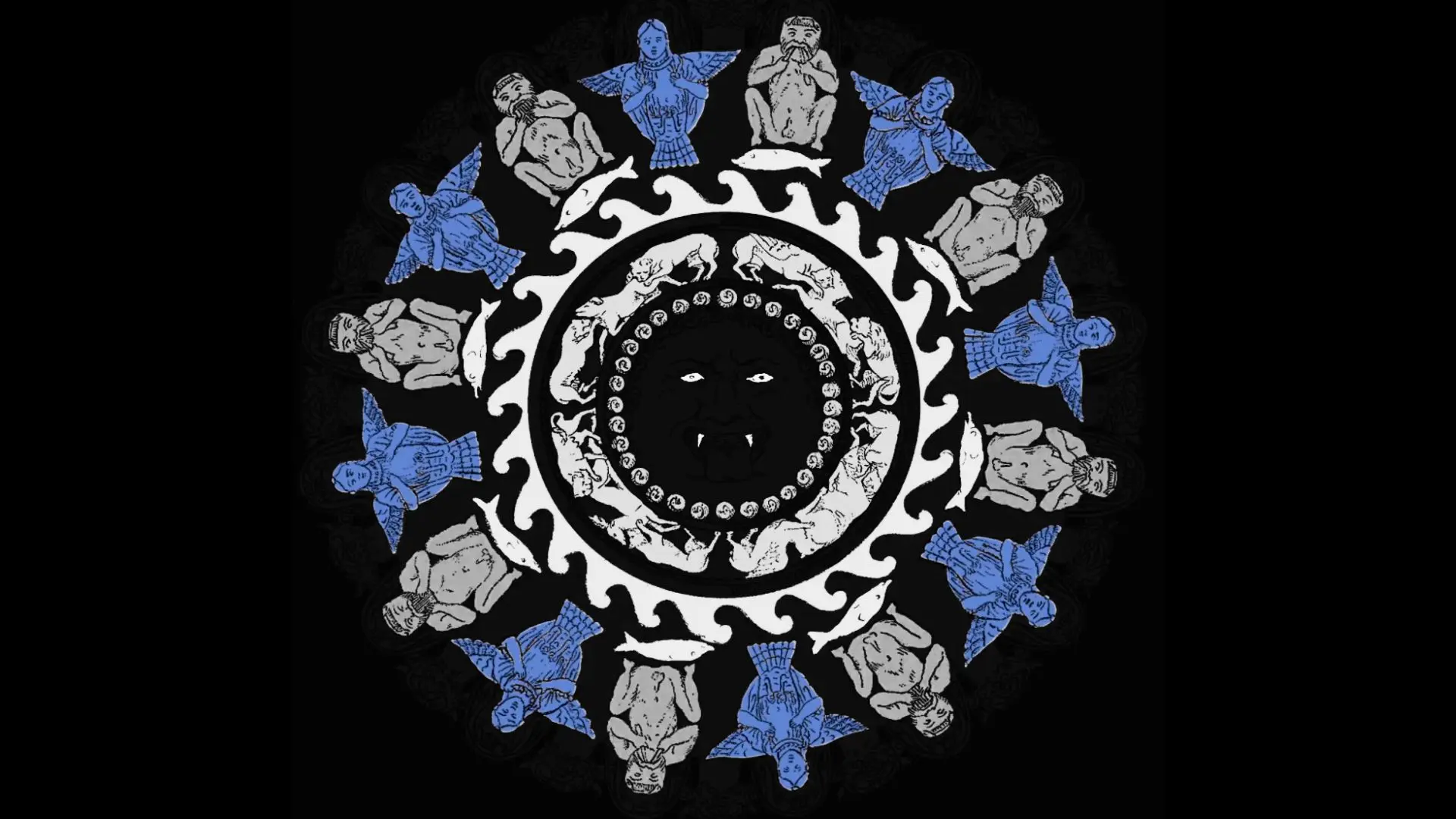
Beneath each of the sixteen spouts appear eight winged sirens with outstretched wings and hands resting on their chests, each alternating with eight ithyphallic satyrs.
The sirens are traditionally charged with ambiguity: through their song they could bring joy, foretell the future, and also herald death. At the same time, they were regarded as guardians of the deceased’s memory and as guides escorting souls to the afterlife.
According to Pythagorean doctrine, the eight notes emitted by each siren together formed the harmony of the celestial spheres, themselves composed of eight heavens.
Satyrs
Eight ithyphallic satyrs, alternately playing the double aulos and the syrinx with their legs bent, appear to take part in a procession, alternating with the eight sirens. Like the sirens, their hybrid nature symbolizes the connection between the world of the living and that of the dead. In particular, the erect phallus alludes to the concept of rebirth. They belong to the celestial dimension, as they are represented in the constellation that replaces Sagittarius.
Satyrs
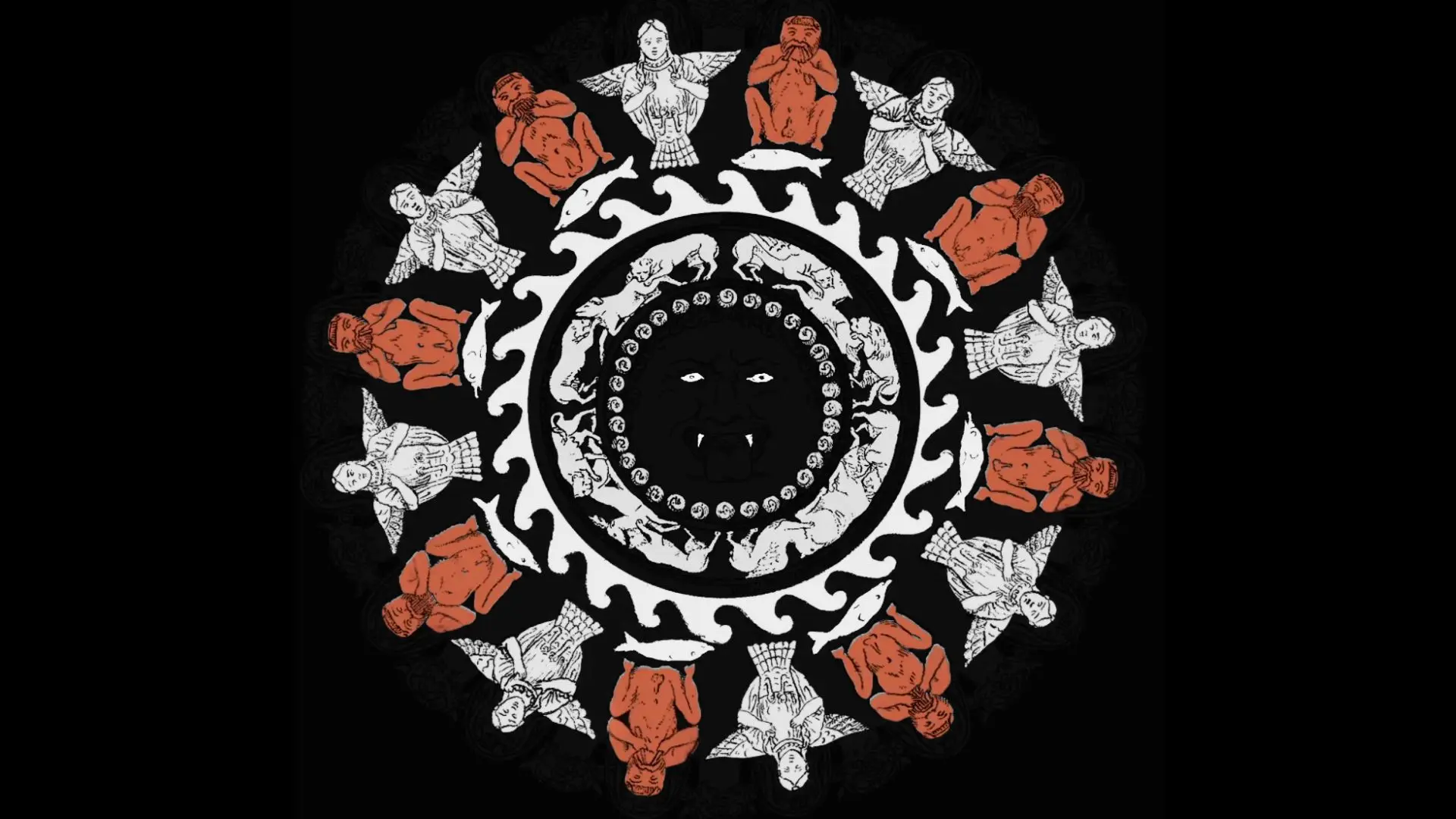
Eight ithyphallic satyrs, alternately playing the double aulos and the syrinx with their legs bent, appear to take part in a procession, alternating with the eight sirens. Like the sirens, their hybrid nature symbolizes the connection between the world of the living and that of the dead. In particular, the erect phallus alludes to the concept of rebirth. They belong to the celestial dimension, as they are represented in the constellation that replaces Sagittarius.
Dolphins
On the lamp, eight leaping dolphins appear above a marine wave. In Etruscan culture, the dolphin was a symbol rich in meaning, often associated with the sea, death, and rebirth. Frequently depicted in funerary art, it represented a guide for the soul toward the afterlife, assuming a psychopomp role.
As a creature of the sea, it also evoked purification and renewal, in keeping with the symbolic value of water for the Etruscans. The sea waves themselves symbolize the boundaries of the earthly world.
Dolphins
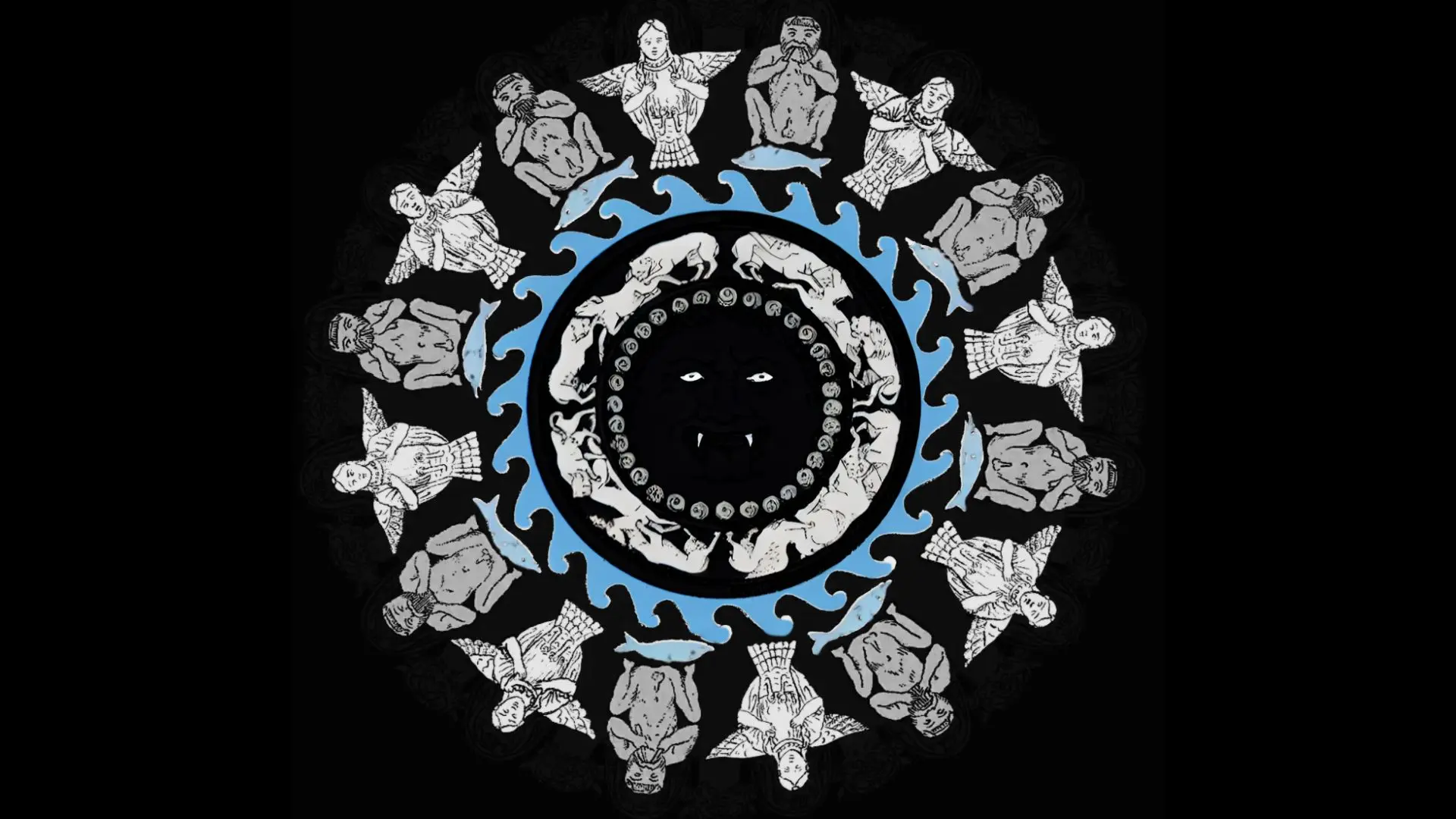
On the lamp, eight leaping dolphins appear above a marine wave. In Etruscan culture, the dolphin was a symbol rich in meaning, often associated with the sea, death, and rebirth. Frequently depicted in funerary art, it represented a guide for the soul toward the afterlife, assuming a psychopomp role.
As a creature of the sea, it also evoked purification and renewal, in keeping with the symbolic value of water for the Etruscans. The sea waves themselves symbolize the boundaries of the earthly world.
Hunting scenes
On the lamp there are twelve animals arranged in four hunting scenes, each composed as follows: a boar attacked by a panther and a lion; a horse bitten by a griffin and a lion; a bull assaulted by a griffin and a panther; and a stag attacked by a panther and a lion.
These hunting scenes, in which herbivores succumb to carnivores, are generally interpreted as allusions to the inevitability of death. From an astronomical perspective, the four groups—each made up of three animals—may evoke the four seasons, each consisting of three months, while the total number of animals, twelve, corresponds to the months of the year.
Hunting scenes
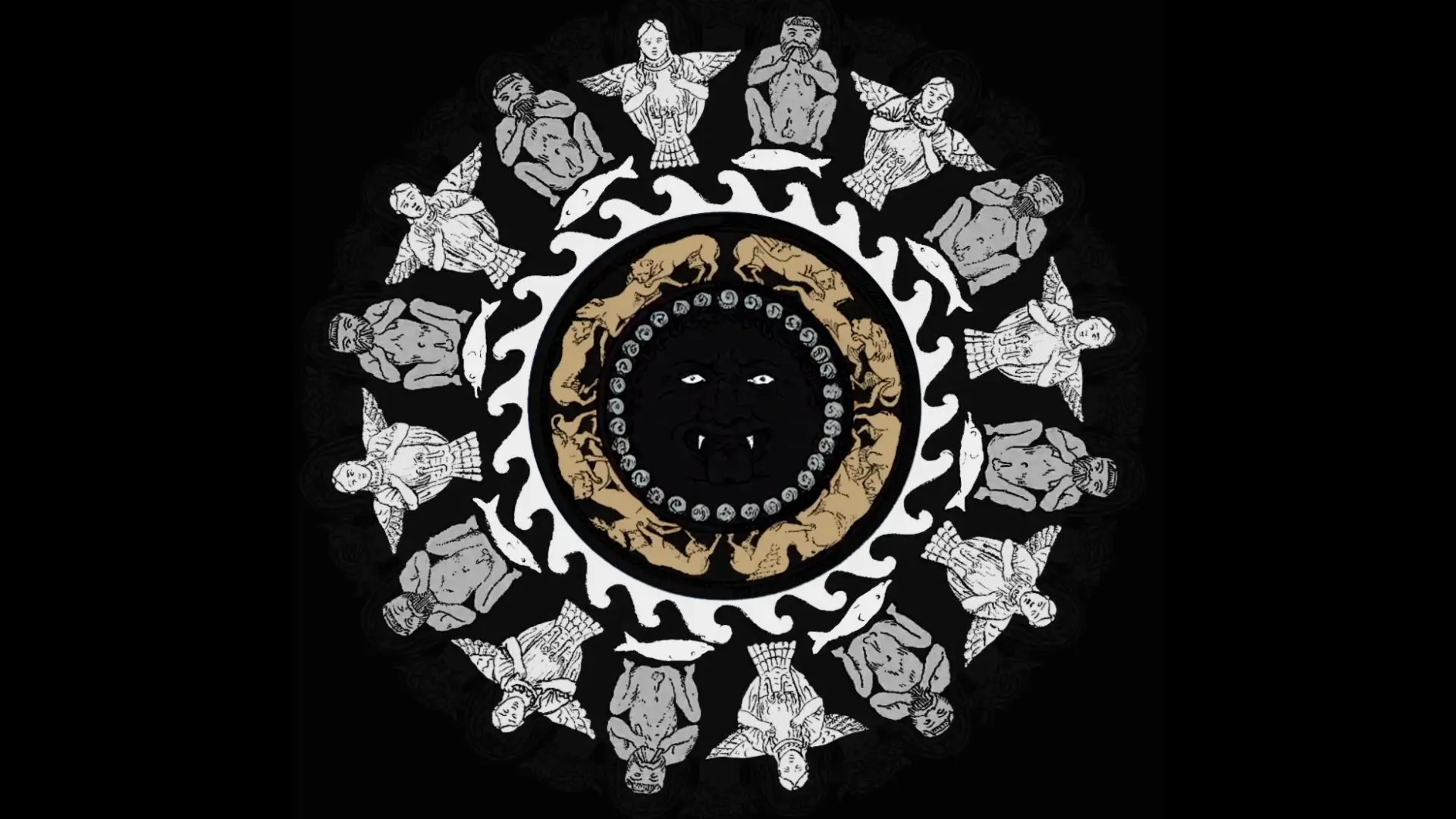
On the lamp there are twelve animals arranged in four hunting scenes, each composed as follows: a boar attacked by a panther and a lion; a horse bitten by a griffin and a lion; a bull assaulted by a griffin and a panther; and a stag attacked by a panther and a lion.
These hunting scenes, in which herbivores succumb to carnivores, are generally interpreted as allusions to the inevitability of death. From an astronomical perspective, the four groups—each made up of three animals—may evoke the four seasons, each consisting of three months, while the total number of animals, twelve, corresponds to the months of the year.
Medusa
Medusa is one of the three Gorgons of Greek mythology, the only mortal among her sisters Stheno and Euryale, daughters of the sea deities Phorcys and Ceto. Originally depicted as monsters with golden wings, bronze hands, and serpents for hair, the Gorgons were later represented as beautiful maidens.
According to ancient sources, Medusa dwelled in the far West or in Libya. In several versions of the myth, she was at first an extraordinarily beautiful woman, transformed into a monster by Athena as punishment for having lain with Poseidon in the goddess’s temple.
Perseus slew her, and from her blood were born Chrysaor and Pegasus; from the drops of blood that fell to the ground, coral was said to have originated. Homer mentions only one Gorgon, whose head was set upon Athena’s aegis.
Medusa
Medusa is one of the three Gorgons of Greek mythology, the only mortal among her sisters Stheno and Euryale, daughters of the sea deities Phorcys and Ceto. Originally depicted as monsters with golden wings, bronze hands, and serpents for hair, the Gorgons were later represented as beautiful maidens.
According to ancient sources, Medusa dwelled in the far West or in Libya. In several versions of the myth, she was at first an extraordinarily beautiful woman, transformed into a monster by Athena as punishment for having lain with Poseidon in the goddess’s temple.
Perseus slew her, and from her blood were born Chrysaor and Pegasus; from the drops of blood that fell to the ground, coral was said to have originated. Homer mentions only one Gorgon, whose head was set upon Athena’s aegis.
Discover more
Among the masterpieces preserved at the MAEC, Motherhood holds a special place both in Gino Severini’s artistic journey and in the history of his native city. Painted in 1916, the work depicts the artist’s wife, Jeanne Fort, breastfeeding their son Antonio, who was born that same year.
The painting marks a significant moment in Severini’s artistic development. After years of Futurist experimentation, and amid the profound transformations that Europe was experiencing during the First World War, the artist turned to an intimate yet universal subject, choosing an apparently simple representation of extraordinary emotional power.
The scene is built upon balance and harmony: mother and child become the focal point of an essential composition in which every element contributes to conveying a sense of serenity and contemplation. While drawing inspiration from the Italian artistic tradition, particularly Renaissance depictions of the Madonna and Child, Severini interprets the subject with a modern sensibility, combining formal rigor with profound humanity.
Many scholars have identified in this work one of the earliest signs of the “Return to Order” that would characterize part of European art in the years following the war. Without abandoning the achievements of modernity, Severini renewed his attention to drawing, compositional balance and the geometric construction of the image.
Today, Motherhood is regarded as one of the iconic works of Cortona’s Severini Collection. Preserved at the MAEC thanks to the strong bond the artist maintained throughout his life with his hometown, the painting represents a key stage in his artistic production and reveals the complexity of an artist who moved through the avant-garde movements of the twentieth century while never ceasing to engage with tradition.
Looking at the painting, one can fully appreciate Severini’s ability to transform a private episode into a universal image: not merely a portrait of his own family, but a reflection on affection, memory and the continuity of life.
Many scholars have identified in this work one of the earliest signs of the “Return to Order” that would characterize part of European art in the years following the war. Without abandoning the achievements of modernity, Severini renewed his attention to drawing, compositional balance and the geometric construction of the image.
Today, Motherhood is regarded as one of the iconic works of Cortona’s Severini Collection. Preserved at the MAEC thanks to the strong bond the artist maintained throughout his life with his hometown, the painting represents a key stage in his artistic production and reveals the complexity of an artist who moved through the avant-garde movements of the twentieth century while never ceasing to engage with tradition.
Looking at the painting, one can fully appreciate Severini’s ability to transform a private episode into a universal image: not merely a portrait of his own family, but a reflection on affection, memory and the continuity of life.
Download, read, and explore further
Did You Know?
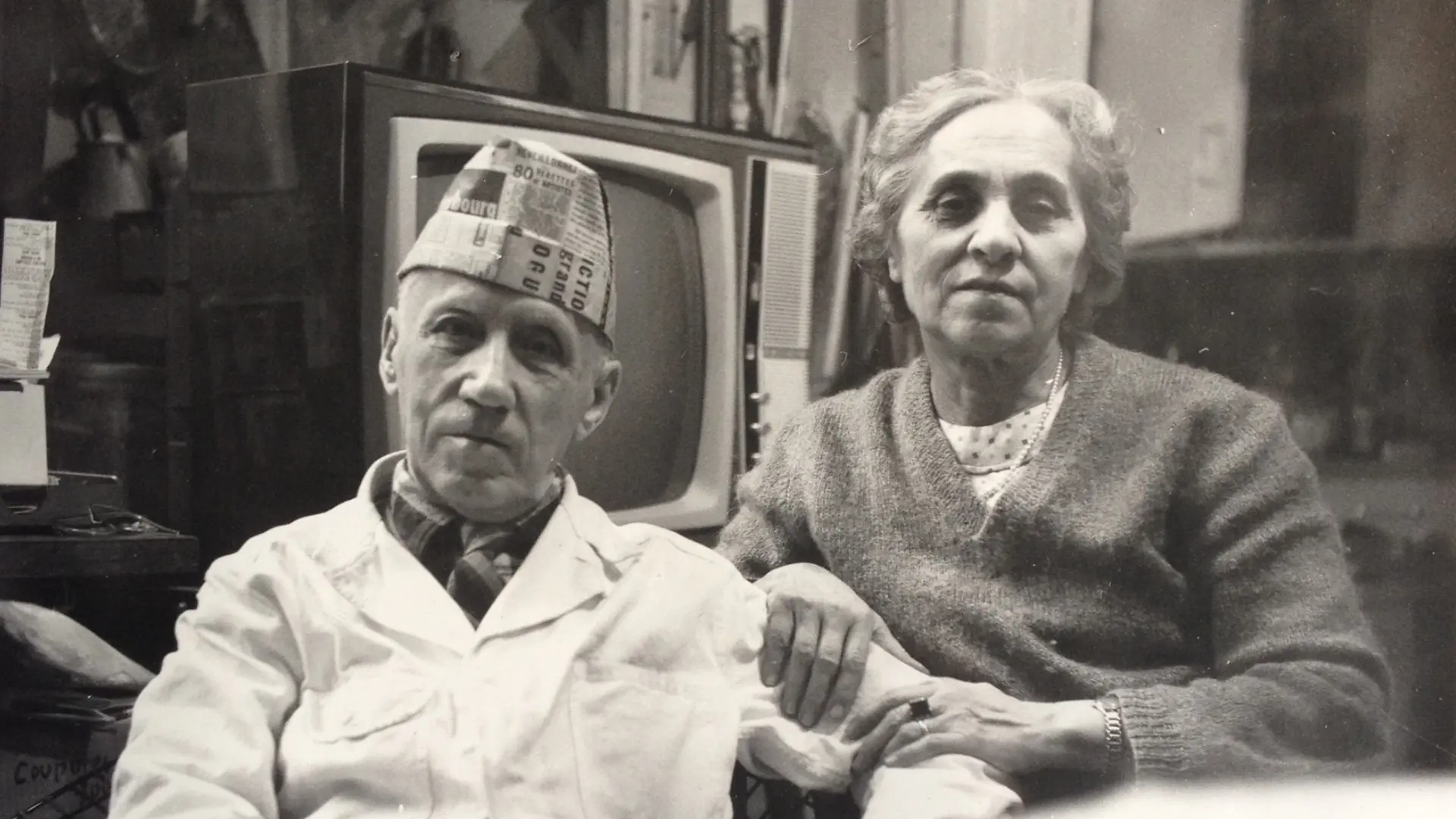
The woman portrayed in the painting is Jeanne Fort, Gino Severini’s wife and daughter of the French poet Paul Fort. The child is Antonio, the couple’s first son, born in 1916 and deceased only a few months later. This deeply personal story gives the painting an extraordinary emotional intensity.
Did You Know?
The woman portrayed in the painting is Jeanne Fort, Gino Severini’s wife and daughter of the French poet Paul Fort. The child is Antonio, the couple’s first son, born in 1916 and deceased only a few months later. This deeply personal story gives the painting an extraordinary emotional intensity.
Between Cubism and the Renaissance
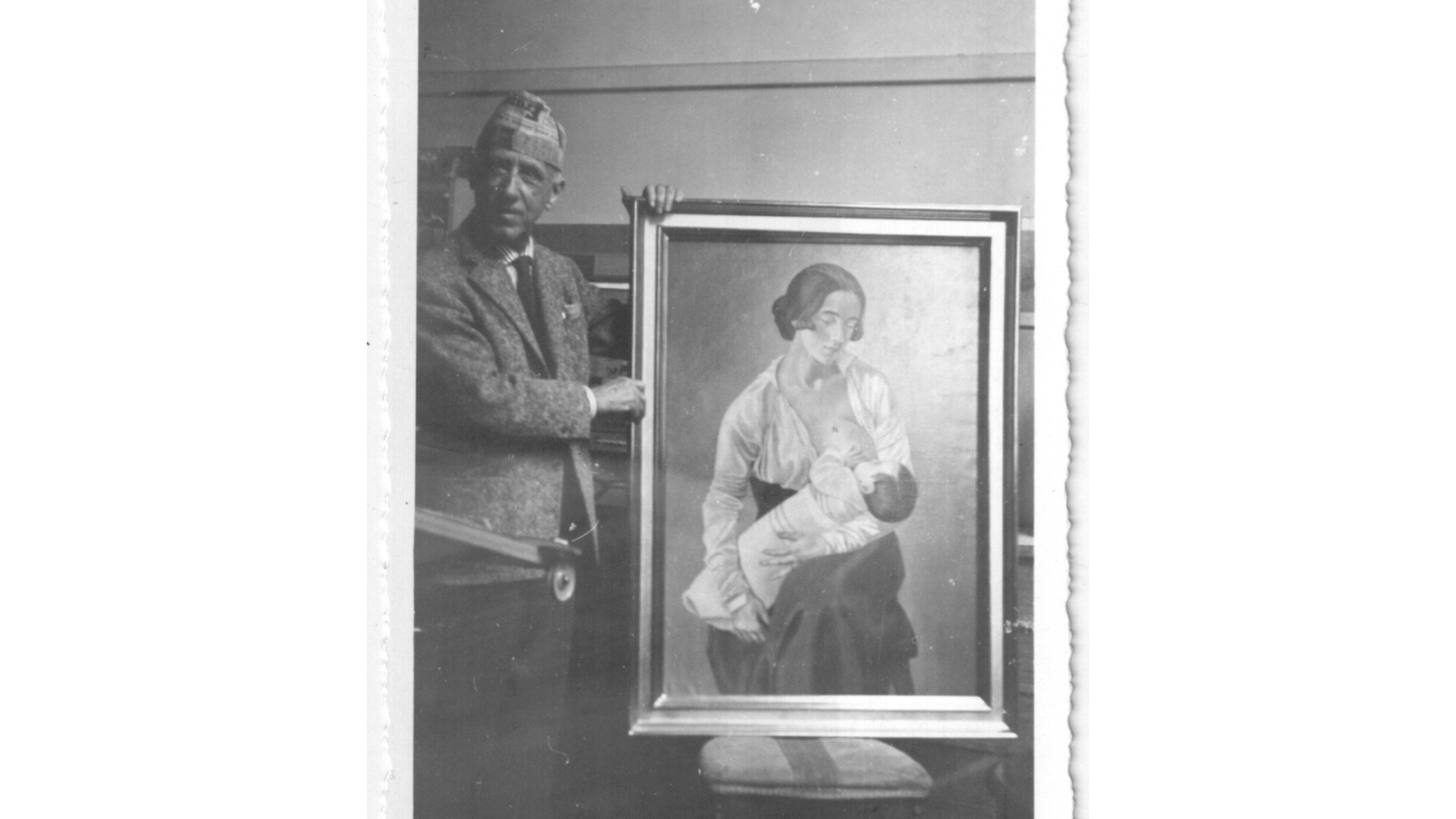
When he painted Motherhood, Severini was deeply engaged in his Cubist experiments. Yet he chose a different path, drawing inspiration from the simplicity of the early Tuscan masters. The work combines the geometric rigor of the avant-garde with the balance and harmony of the great Italian artistic tradition, creating a new and highly personal visual language.
Between Cubism and the Renaissance
When he painted Motherhood, Severini was deeply engaged in his Cubist experiments. Yet he chose a different path, drawing inspiration from the simplicity of the early Tuscan masters. The work combines the geometric rigor of the avant-garde with the balance and harmony of the great Italian artistic tradition, creating a new and highly personal visual language.
Severini’s Most Famous Work
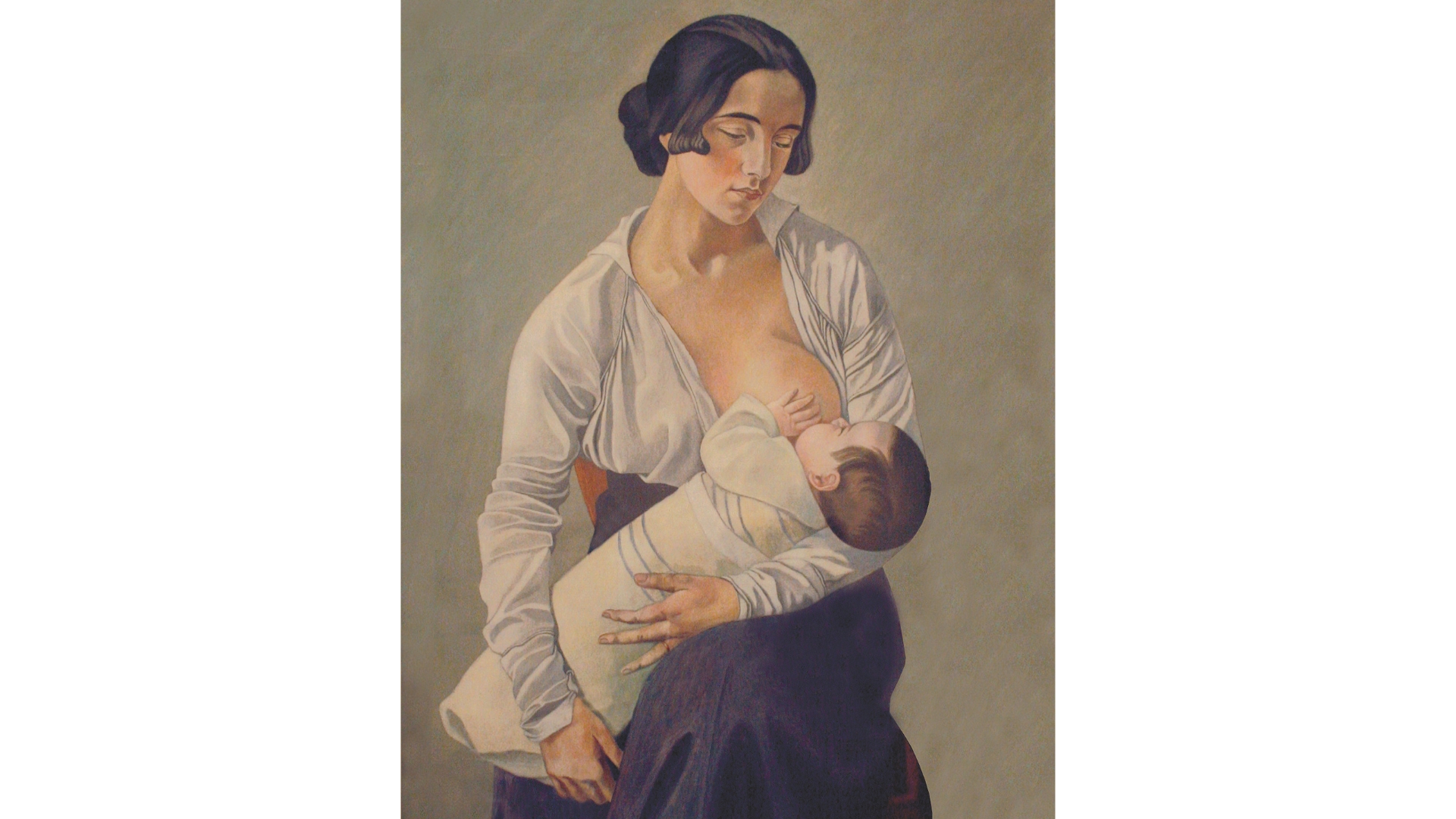
Motherhood is widely considered Gino Severini’s best-known, most reproduced and most frequently exhibited work. Despite its relatively modest size, it impresses viewers with its remarkable sense of monumentality. The painting depicts Jeanne Fort, the artist’s wife, breastfeeding their young son Antonio, transforming an intimate family scene into an image of universal significance.
Severini’s Most Famous Work
Motherhood is widely considered Gino Severini’s best-known, most reproduced and most frequently exhibited work. Despite its relatively modest size, it impresses viewers with its remarkable sense of monumentality. The painting depicts Jeanne Fort, the artist’s wife, breastfeeding their young son Antonio, transforming an intimate family scene into an image of universal significance.
Discover more
Among the masterpieces preserved at the MAEC, Motherhood holds a special place both in Gino Severini’s artistic journey and in the history of his native city. Painted in 1916, the work depicts the artist’s wife, Jeanne Fort, breastfeeding their son Antonio, who was born that same year.
The painting marks a significant moment in Severini’s artistic development. After years of Futurist experimentation, and amid the profound transformations that Europe was experiencing during the First World War, the artist turned to an intimate yet universal subject, choosing an apparently simple representation of extraordinary emotional power.
The scene is built upon balance and harmony: mother and child become the focal point of an essential composition in which every element contributes to conveying a sense of serenity and contemplation. While drawing inspiration from the Italian artistic tradition, particularly Renaissance depictions of the Madonna and Child, Severini interprets the subject with a modern sensibility, combining formal rigor with profound humanity.
Many scholars have identified in this work one of the earliest signs of the “Return to Order” that would characterize part of European art in the years following the war. Without abandoning the achievements of modernity, Severini renewed his attention to drawing, compositional balance and the geometric construction of the image.
Today, Motherhood is regarded as one of the iconic works of Cortona’s Severini Collection. Preserved at the MAEC thanks to the strong bond the artist maintained throughout his life with his hometown, the painting represents a key stage in his artistic production and reveals the complexity of an artist who moved through the avant-garde movements of the twentieth century while never ceasing to engage with tradition.
Looking at the painting, one can fully appreciate Severini’s ability to transform a private episode into a universal image: not merely a portrait of his own family, but a reflection on affection, memory and the continuity of life.
Many scholars have identified in this work one of the earliest signs of the “Return to Order” that would characterize part of European art in the years following the war. Without abandoning the achievements of modernity, Severini renewed his attention to drawing, compositional balance and the geometric construction of the image.
Today, Motherhood is regarded as one of the iconic works of Cortona’s Severini Collection. Preserved at the MAEC thanks to the strong bond the artist maintained throughout his life with his hometown, the painting represents a key stage in his artistic production and reveals the complexity of an artist who moved through the avant-garde movements of the twentieth century while never ceasing to engage with tradition.
Looking at the painting, one can fully appreciate Severini’s ability to transform a private episode into a universal image: not merely a portrait of his own family, but a reflection on affection, memory and the continuity of life.