
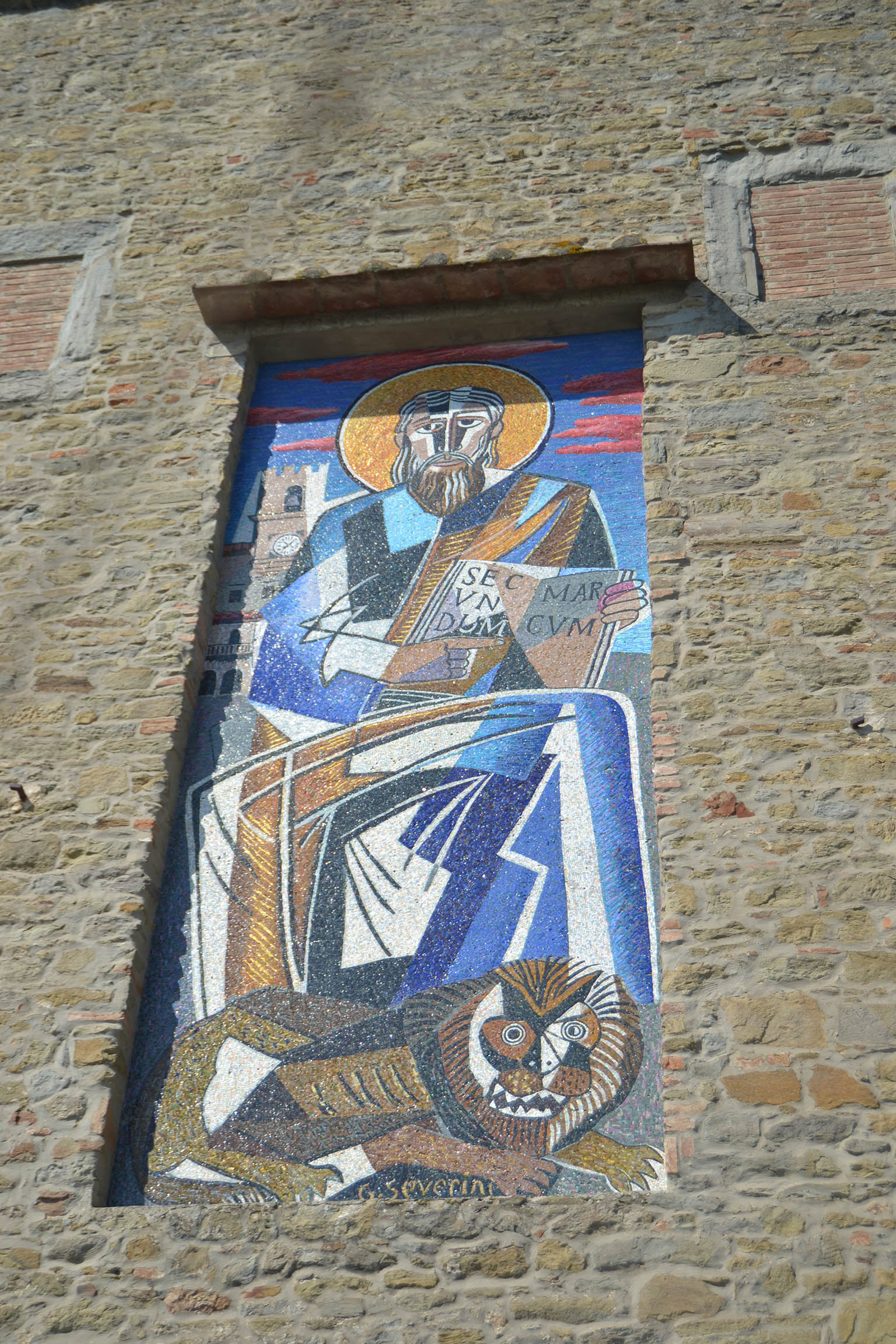
From the collaboration between Severini and Monsignor Franciolini emerged, in addition to the Via Crucis, one of the most iconic interventions in Cortona’s urban landscape: the great mosaic of San Marco, created in 1961 for the façade of the Chiesa di San Marco.
Designed to be visible even from a distance — “it must be seen from Carbonaia,” the artist wrote — the panel (550 × 224 cm) was conceived in strict dialogue with the architecture of the façade. Without frames or added decorative elements, the mosaic is embedded directly into the masonry, respecting its severe structural unity.
The monumental figure of the Evangelist, patron saint of the city since 1261, dominates the space with an almost imperial force. The language is Neo-Cubist, synthetic and vigorous; the chromatic scale, essential yet intense, alternates cool blues with warm Siena earth tones. At the saint’s feet, the lion — powerful and slightly ironic — once again reveals the modernity of Severini’s vision.
As the artist’s last great mosaic work, San Marco unites iconographic tradition with contemporary sensibility, symbolically marking the beginning of the spiritual itinerary that unfolds at the foot of Cortona’s hill.
With this work, Severini definitively secured the esteem of his fellow citizens, leaving the city a monumental sign of his dialogue between art, faith, and landscape.