
From the Tumulus to the Museum
The gold fibula was accidentally discovered along the dromos leading to Tomb 1 of the Sodo II Tumulus, one of the most imposing funerary complexes of Etruscan Cortona. Now exhibited at the MAEC – Museum of the Etruscan Academy and the City of Cortona, it bears witness to the deep connection between the archaeological landscape and the Museum.
From the Tumulus to the Museum
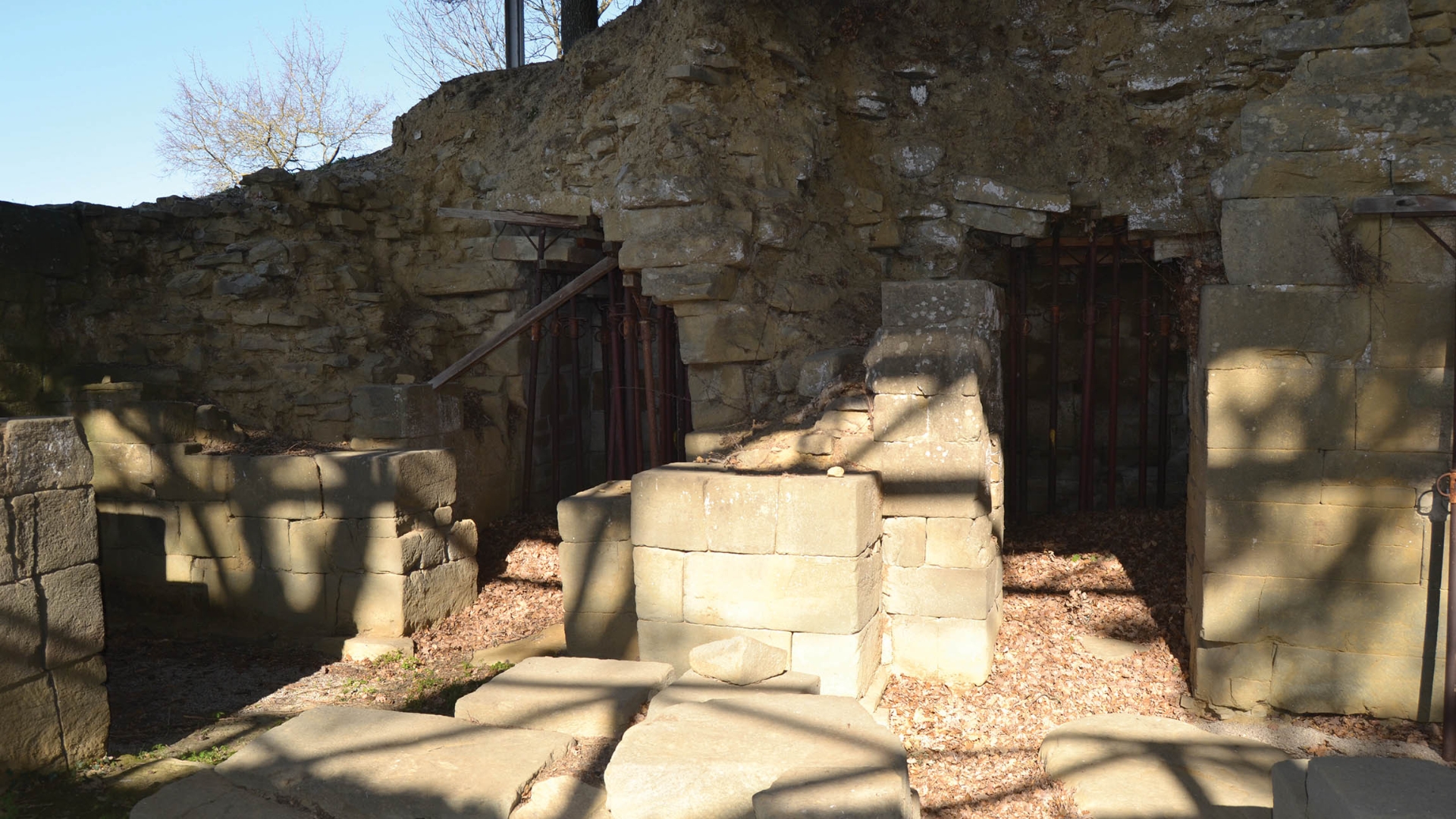
The gold fibula was accidentally discovered along the dromos leading to Tomb 1 of the Sodo II Tumulus, one of the most imposing funerary complexes of Etruscan Cortona. Now exhibited at the MAEC – Museum of the Etruscan Academy and the City of Cortona, it bears witness to the deep connection between the archaeological landscape and the Museum.
An Archaic Masterpiece
Dating to the second quarter of the 6th century BC, the fibula features a bow shaped as a crouching panther, rendered with remarkable plasticity. The rectangular catch plate ends in a finely modeled feline protome, while the spring and pin are made of gold wire. A jewel of exceptional craftsmanship, it reflects the prestige of the Cortonese elite in the Archaic period.
An Archaic Masterpiece
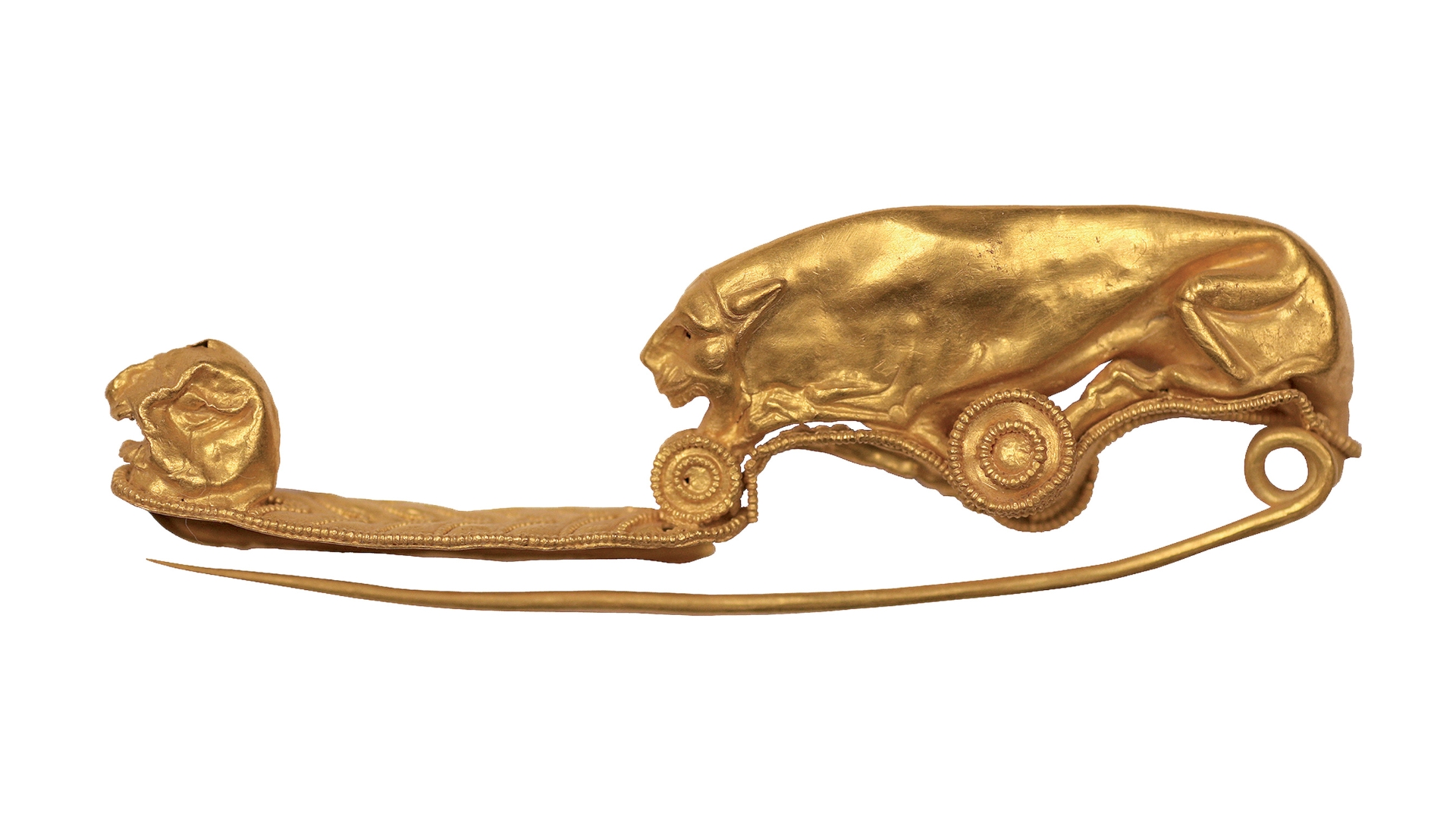
Dating to the second quarter of the 6th century BC, the fibula features a bow shaped as a crouching panther, rendered with remarkable plasticity. The rectangular catch plate ends in a finely modeled feline protome, while the spring and pin are made of gold wire. A jewel of exceptional craftsmanship, it reflects the prestige of the Cortonese elite in the Archaic period.
Technique and Symbolism
The lower edge is finished with a notched gold wire ending in two small discs, while the upper part is decorated with granulation depicting the Tree of Life. Symbols of strength, protection, and regeneration combine with refined craftsmanship, expressing identity, power, and the cultural connections of Etruscan Cortona.
Technique and Symbolism
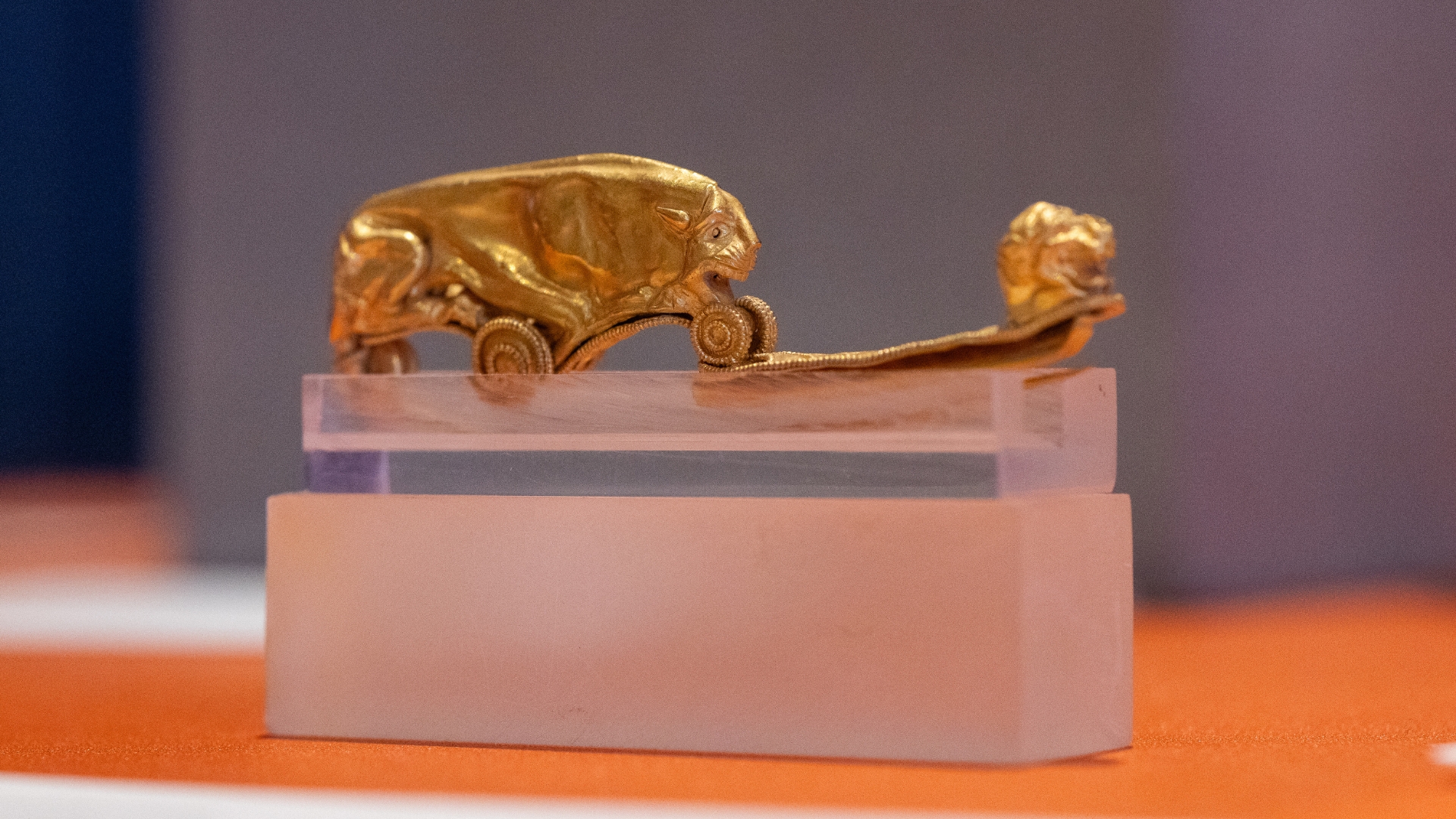
The lower edge is finished with a notched gold wire ending in two small discs, while the upper part is decorated with granulation depicting the Tree of Life. Symbols of strength, protection, and regeneration combine with refined craftsmanship, expressing identity, power, and the cultural connections of Etruscan Cortona.
Discover more
The gold fibula comes from Tomb 1 of Tumulus II at Sodo, one of the most important funerary complexes of Etruscan Cortona, dating between the 7th and 6th centuries BC. Discovered in the area where the Archaeological area of Sodo stands today and preserved at the MAEC – Museum of the Etruscan Academy and the City of Cortona, it is an emblematic example of the dialogue between landscape and museum: what originated in the ancient territory continues to tell its story within the exhibition galleries.
Dating to the second quarter of the 6th century BC, the fibula has a bow shaped as a crouching panther, rendered with extraordinary plasticity. The rectangular catchplate, elongated and flattened, ends in a finely modelled feline protome; the spring and pin are made of simple gold wire. The lower edge is finished with a notched wire articulated into two small spirals, while the upper part is decorated in granulation with the representation of the so-called Tree of Life.
Its technical quality reveals workmanship of the highest level. Granulation, achieved by applying tiny gold spheres soldered to the surface, testifies to the extraordinary skill of Etruscan goldsmiths, among the most refined in the archaic Mediterranean. An object of this kind points to aristocratic patronage, as well as to the workshop’s access to trade networks and to a structured and dynamic society.
Its iconography is equally significant. The panther, widespread in Orientalising and Archaic visual language, evokes symbols of strength, protection, and prestige, while the Tree of Life, of Near Eastern origin, alludes to regeneration and continuity between the earthly and the afterlife. In a funerary context, these elements take on a particularly intense symbolic and identity-related meaning.
The fibula is therefore not merely an ornament: it is a sign of power, belonging, and cultural connections. From the aristocratic tumulus to the contemporary museum, this masterpiece tells the story of the wealth, ambitions, and identity of Etruscan Cortona, strengthening the deep bond between the archaeological heritage and the city today.