

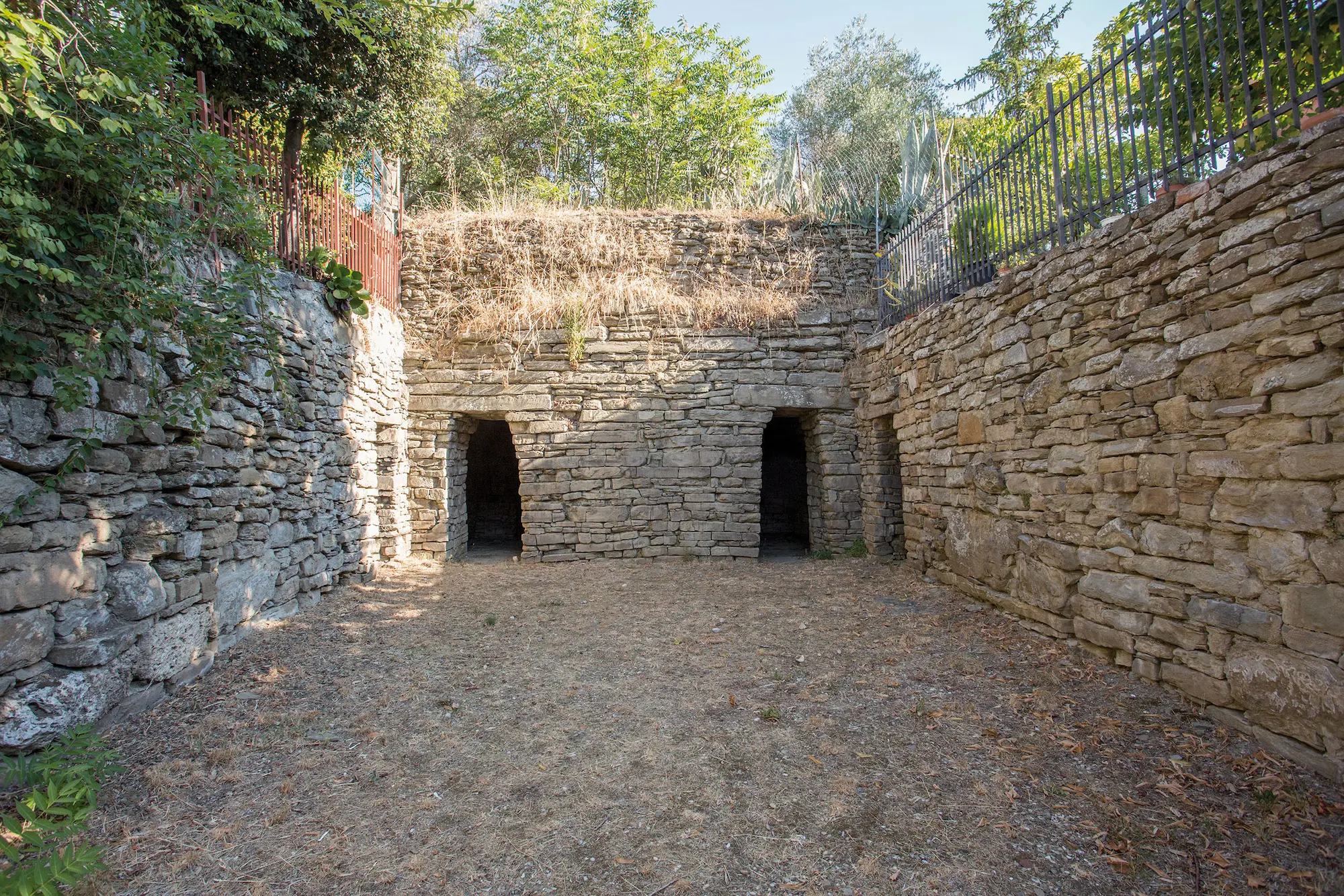
The tumulus was identified in 1840 by the Tuscan archaeologist Alessandro François. It is located in the centre of Camucia, between Via Ipogeo and Via Etruria, set among residential buildings. It stood along an ancient route leading towards Cortona. It dates to the 8th century BC, has a circumference of over 200 metres, and partly incorporates a natural hill whose rock was cut to construct the circular drum.
The structure had a massive drum and a hemispherical covering made of stone chips, covered with a layer of clay and fill earth that made it resemble a small hill. Inside, two multi-chambered tombs were discovered. .
Discover more
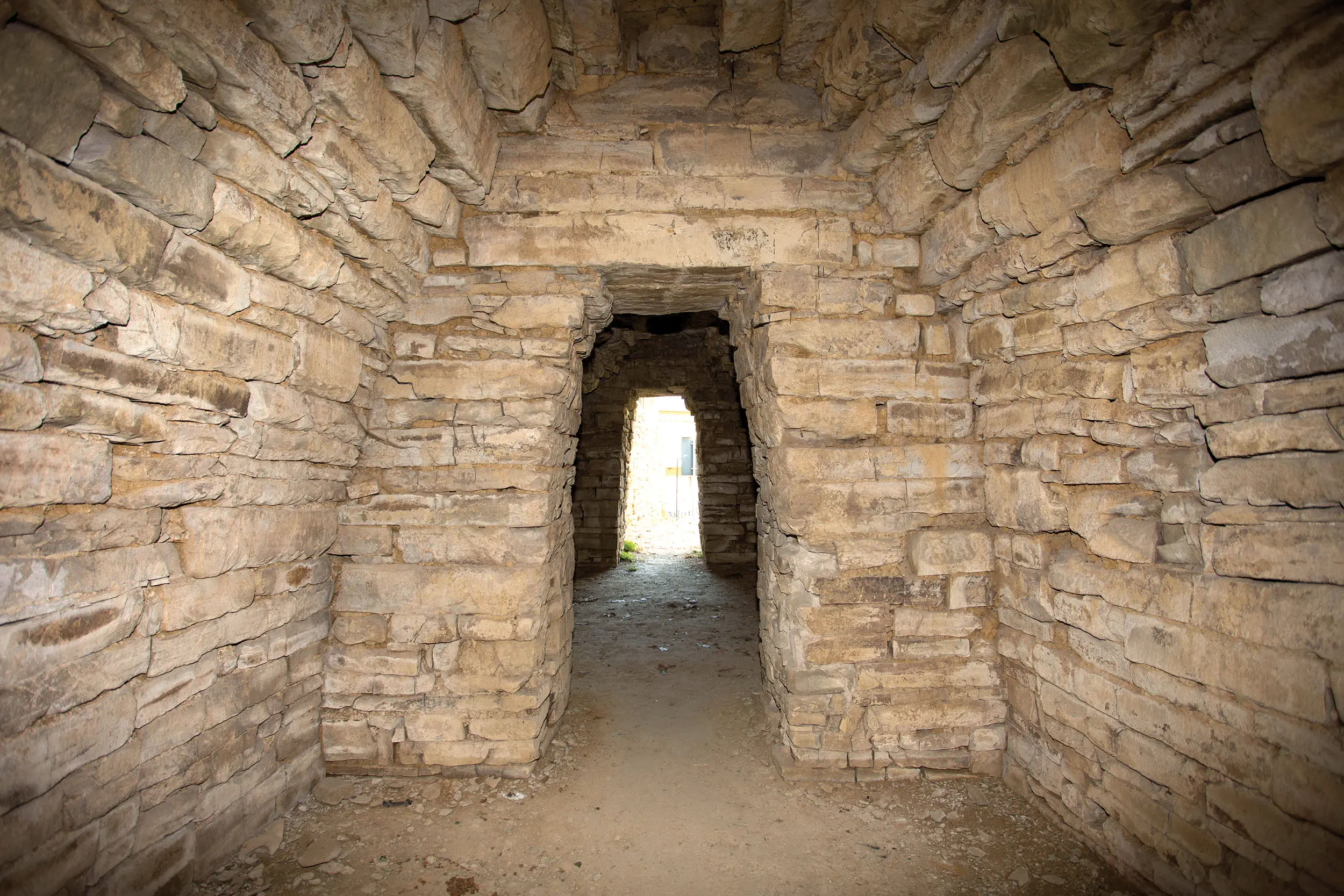
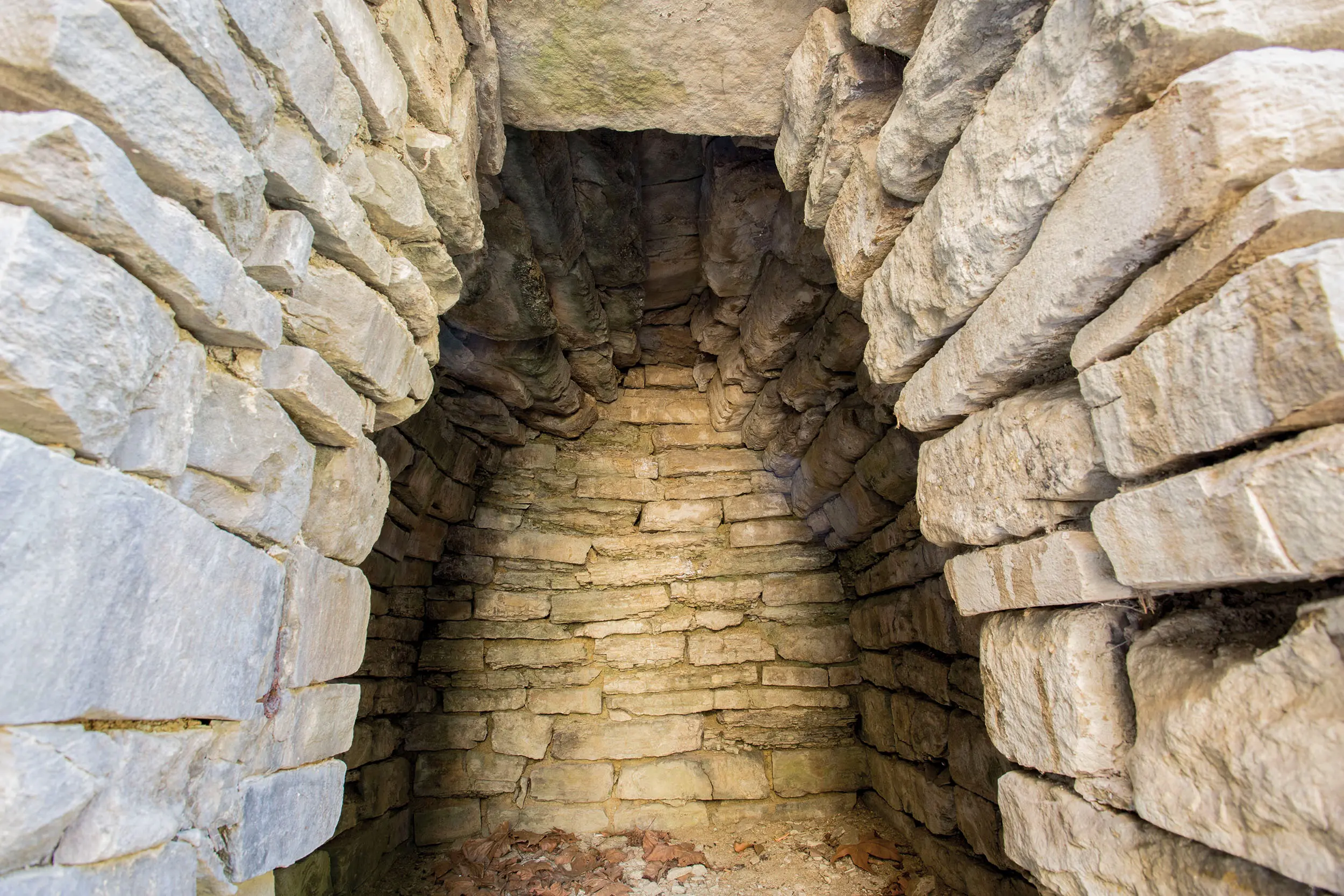
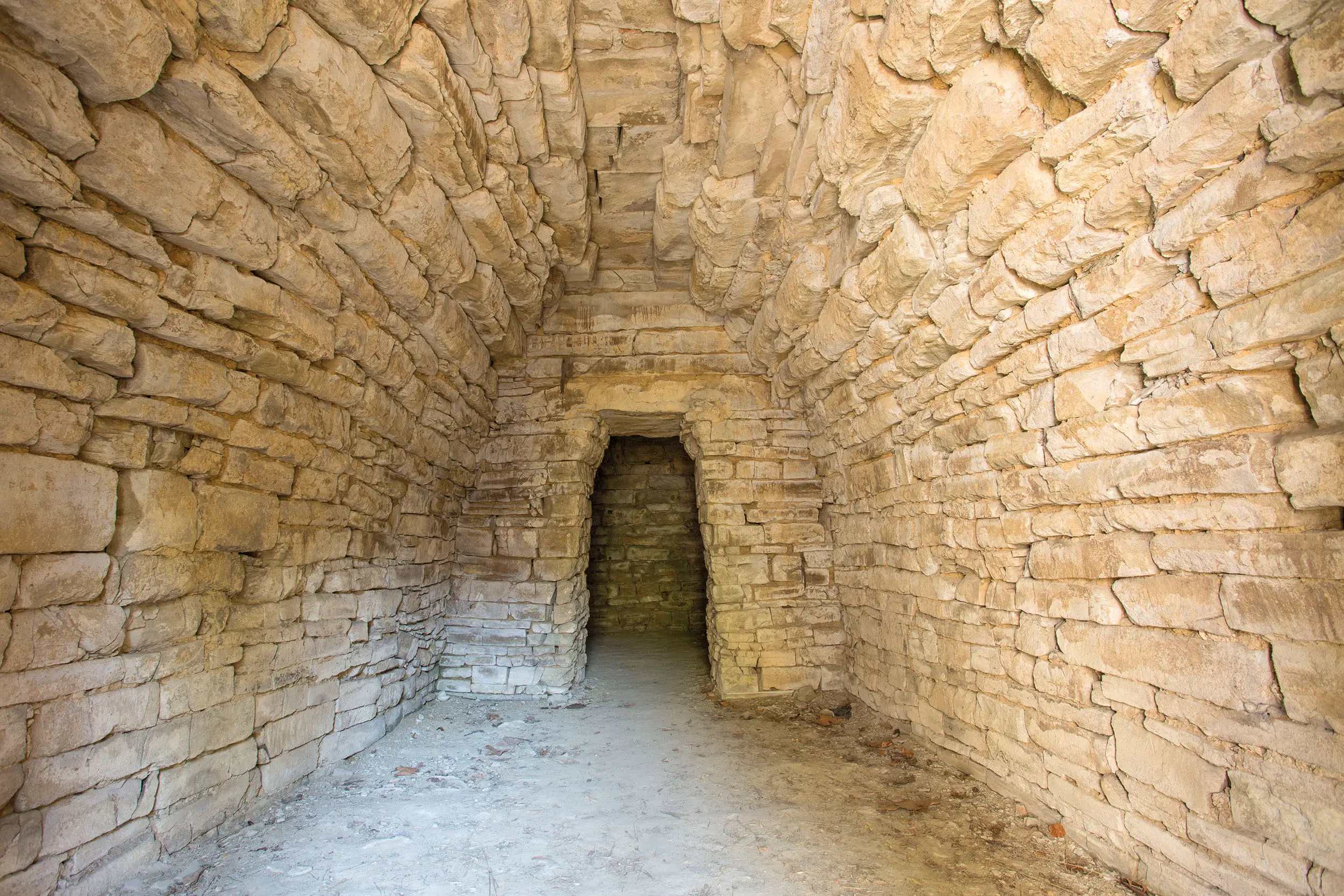
Tomb A consists of a long corridor leading to a vestibule covered by projecting vaults. On the sides of the vestibule open two single small chambers, while at the front develops the central body with two bipartite chambers. All the chambers are covered by projecting pseudo-vaults closed at the top by horizontal slabs.
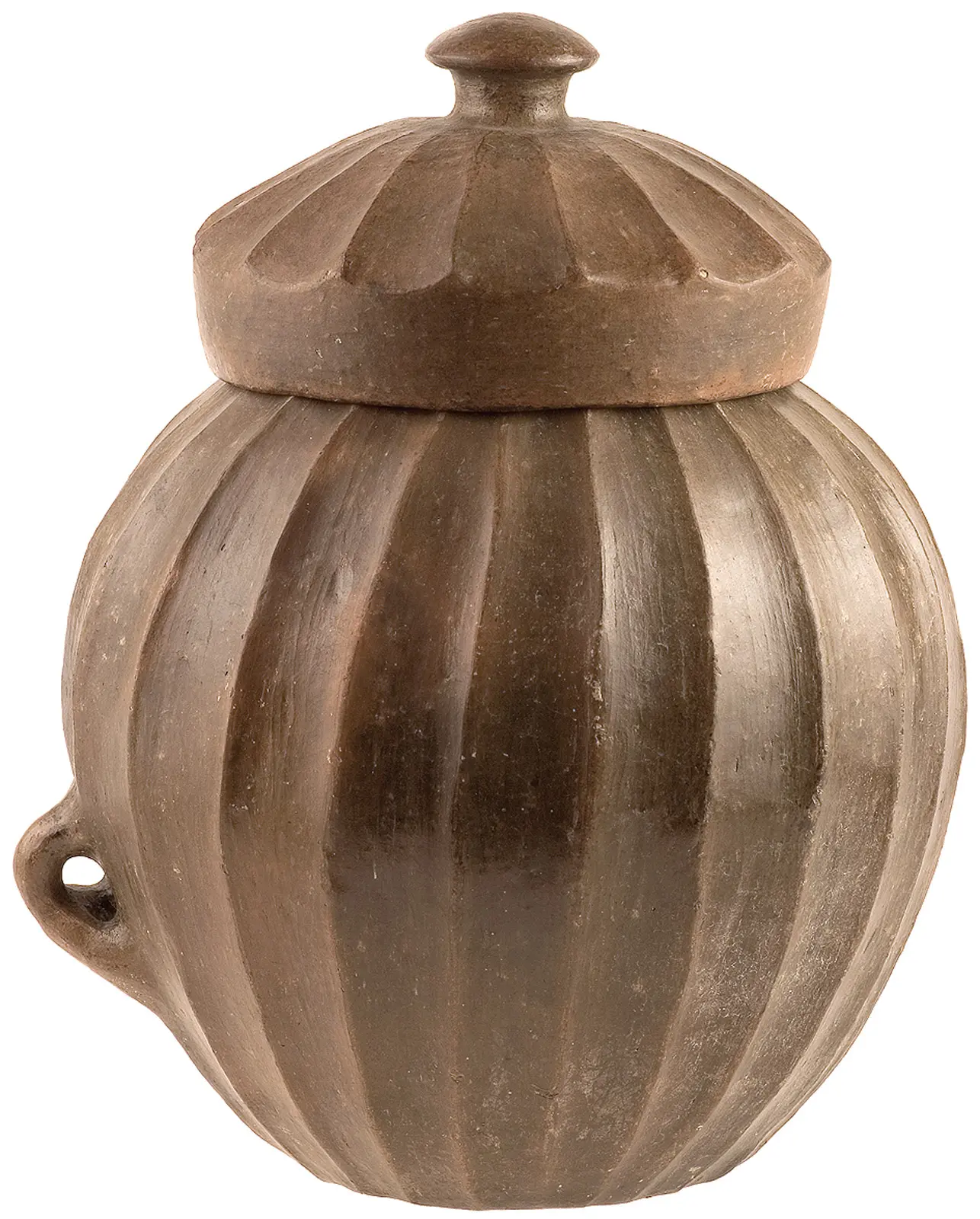
Tomb B was discovered in 1964 thanks to an excavation by Piera Bocci Pacini. It is composed of a corridor onto which the lateral chambers open, three on each side, while the terminal chamber becomes an extension of the corridor itself. The stones used for the masonry are of small and medium size, in some points faced with slabs inserted into the ground. The grave goods that were found are now displayed at the MAEC.
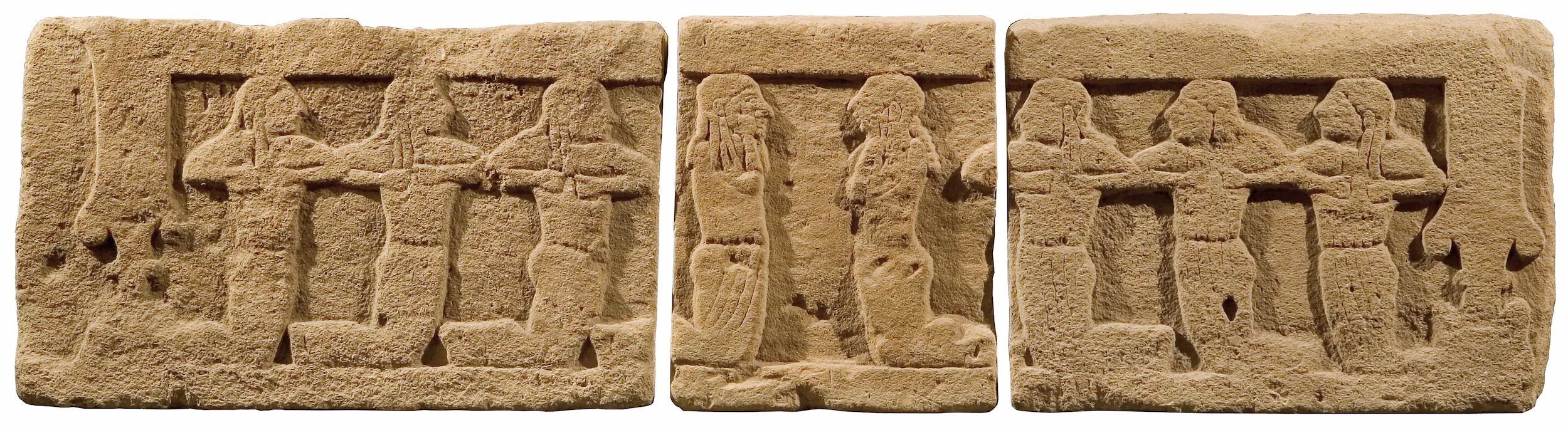
Among the most significant finds from the tomb stands out a funerary bed composed of three blocks of tufa placed side by side on shaped legs. Its frontal decoration, in low relief, presents a scene of funerary lamentation. Eight kneeling female figures follow one another: the two central figures cover their faces with their hands, while the lateral ones beat their chests. The figures are stylistically akin to those of the relief-decorated cippi produced by the workshops of Chiusi in the second half of the 6th century BC. The bed assumes particular significance, illustrating, among other things, some distinctive aspects of funerary cults in Etruria during this period. The bed assumes particular significance, illustrating, among other things, some distinctive aspects of funerary cults in Etruria during this period.
The tombs belonging to the “Melone” of Camucia, together with those of the contemporary “Meloni” of Sodo, document a distinctive feature of archaic Etruscan society in Cortona. This society was made up of gentes whose prosperity was based on land ownership, agricultural production, and the trade of local resources. The so-called principes of Cortona in that period lived in the countryside, at the centre of their estates, in self-sufficient farm villas comparable to the “palaces” known from other areas of inland Etruria. Evidence of this situation also comes from an emergency excavation carried out in the Fossa del Lupo area, adjacent to both Camucia and Sodo, where the materials brought to light date to the same archaic phase as the great tombs..
Information and accessibility
The monuments of the Parco diffuso can be visited independently.
Please note that the area does not offer routes suitable for visitors with reduced mobility; the ground may be uneven, so comfortable footwear is recommended. There are no water sources along the route.
For information contact the MAEC:
0575 630415
Cultural Itineraries
The François Tumulus is included in one of the MAEC Cultural Itineraries on izi.TRAVEL.