

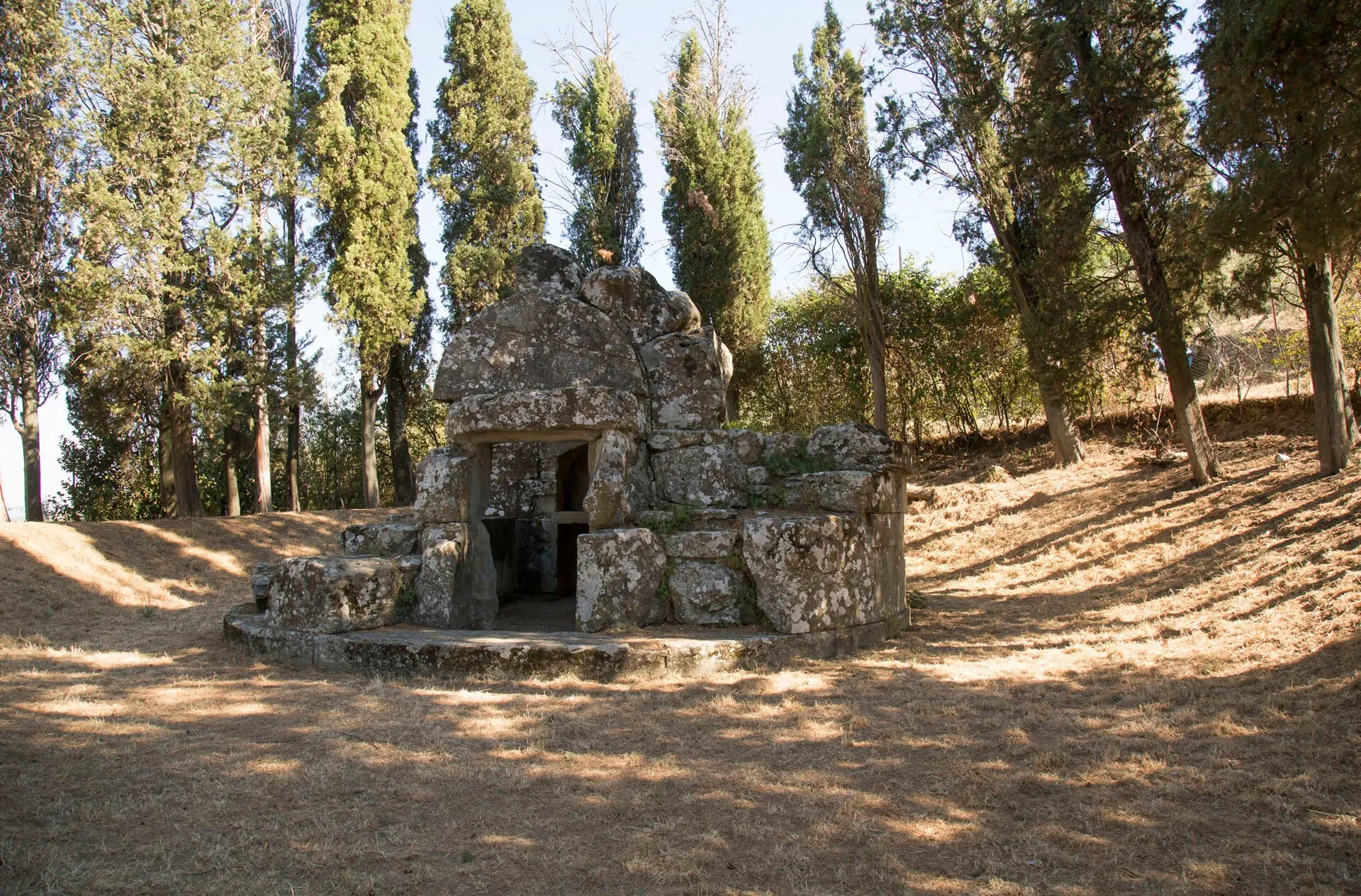
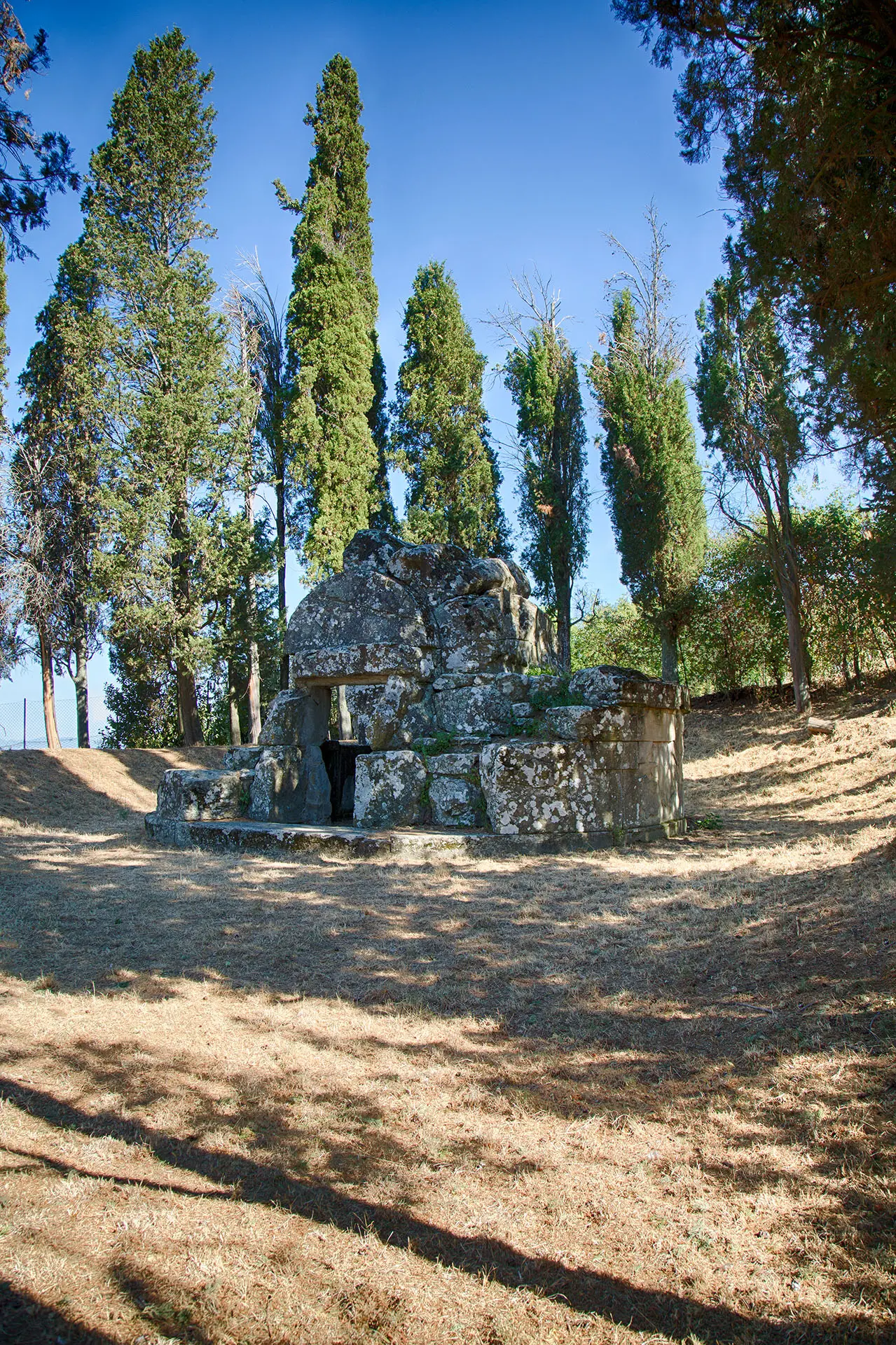
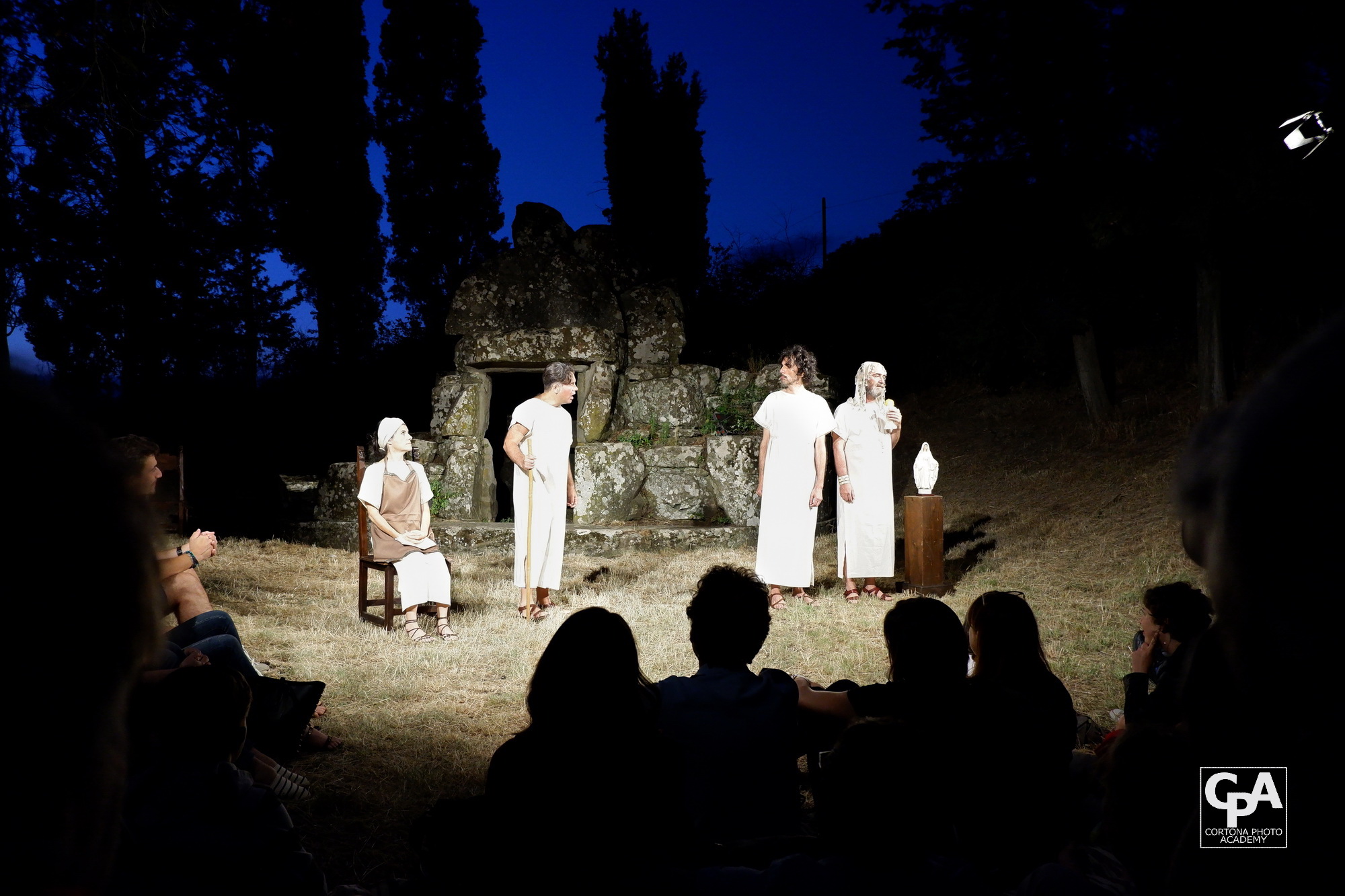
The tanella di Pitagora, which is part of the MAEC Park, is an Etruscan tomb from the Hellenistic period (2nd century BC). It is located on the slope descending from Cortona towards the Valdichiana, not far from la tanella Angori.
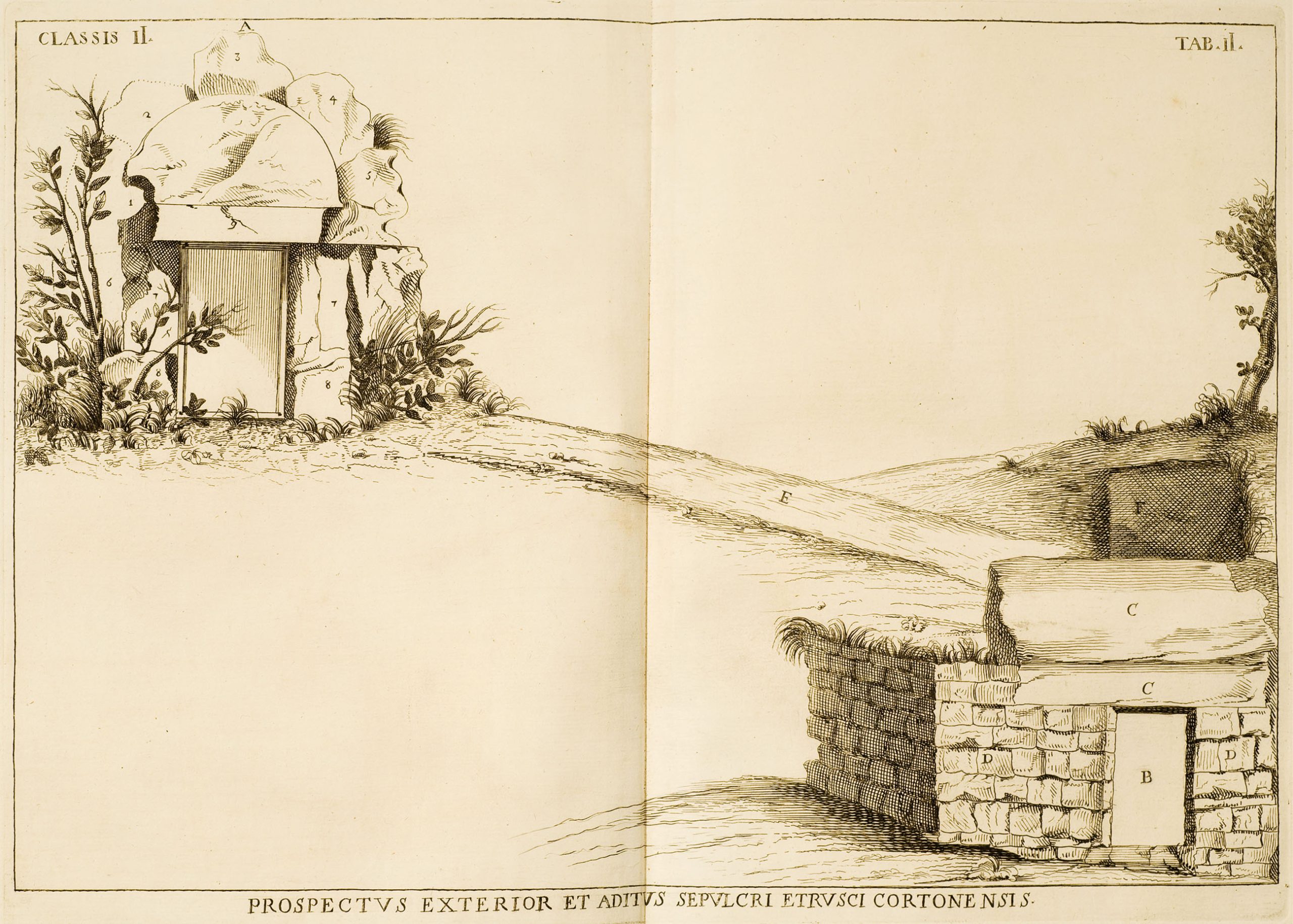
The tomb was visited in 1566 by the great Renaissance art historian and biographer Giorgio Vasari, who mentioned it for the first time. It owes its name to an ancient misunderstanding between Cortona and Crotone, the city of Magna Graecia where the philosopher Pythagoras actually lived.
Discover more
A small urn lid with an inscribed epigraph, currently displayed at the MAEC Museum, was found near the tomb and attests the ownership of the tanella by the gens of the cusu, an aristocratic Cortonese family also mentioned in the Tabula cortonensis.
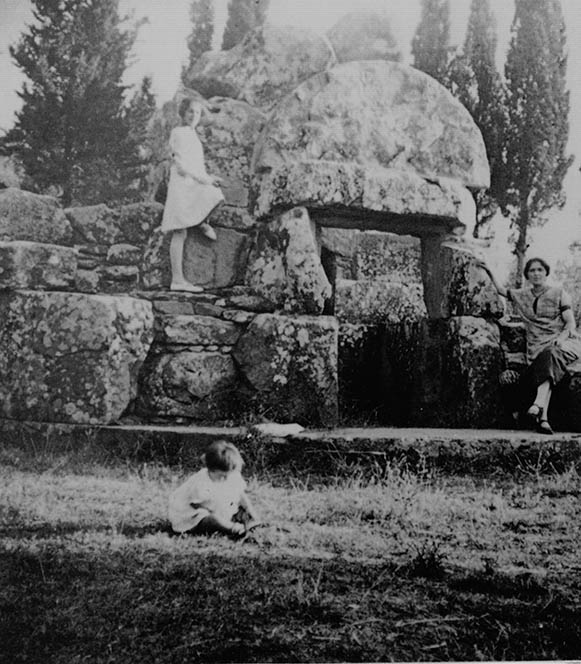
The tomb has always remained above ground, although systematic excavations for its complete uncovering date only to the first half of the nineteenth century. In 1929 the tomb was donated by its owner, Countess Maria Laparelli Pitti, to the Accademia Etrusca, which oversaw its restoration and arrangement within a picturesque setting of cypress trees and greenery.
The tanelle are typical Hellenistic funerary structures, shaped like small tumuli and entirely built in local sandstone masonry. They contain only a single central burial chamber, along the sides of which are niches where cinerary urns were placed, since from this period onward cremation burial came back into use.
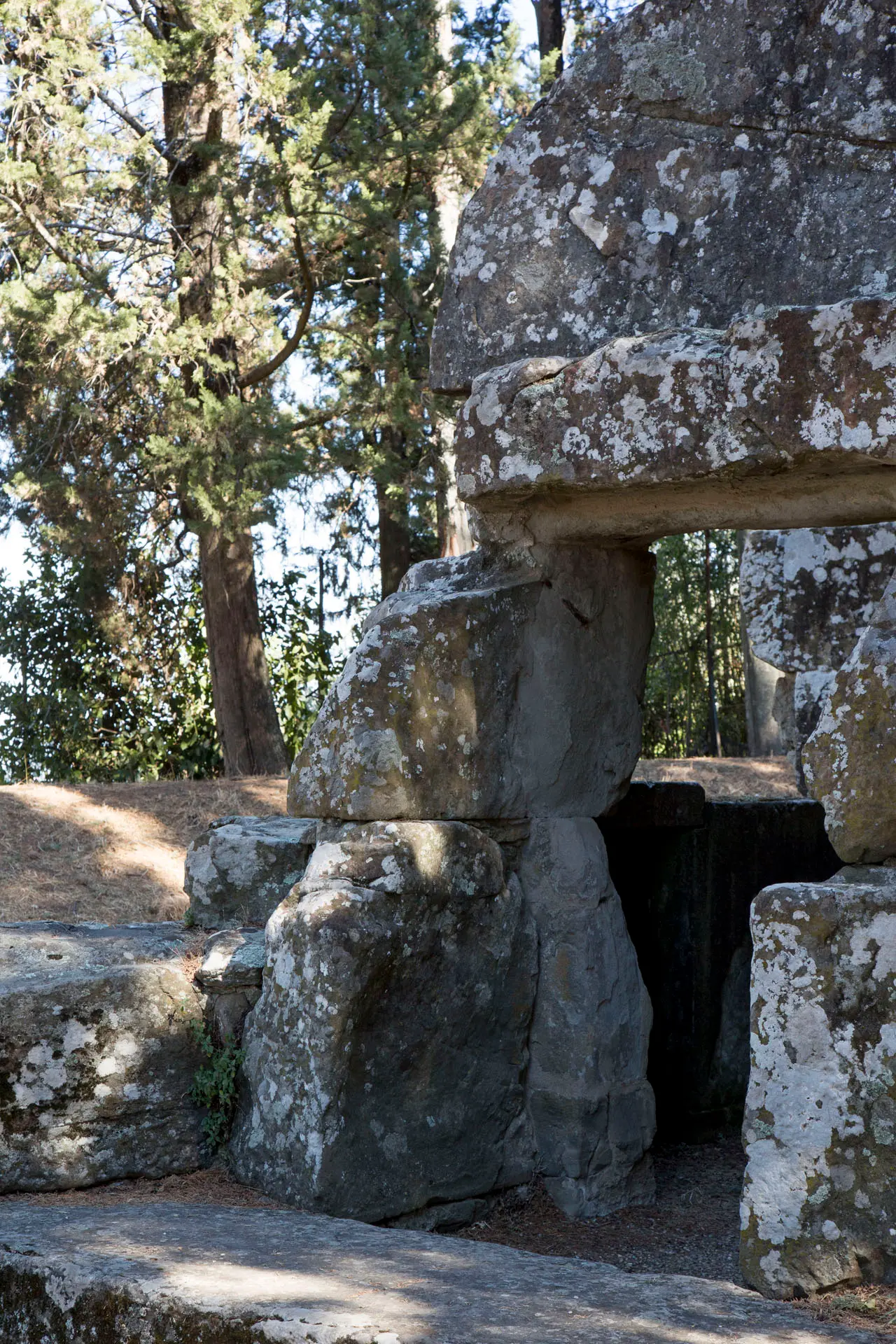
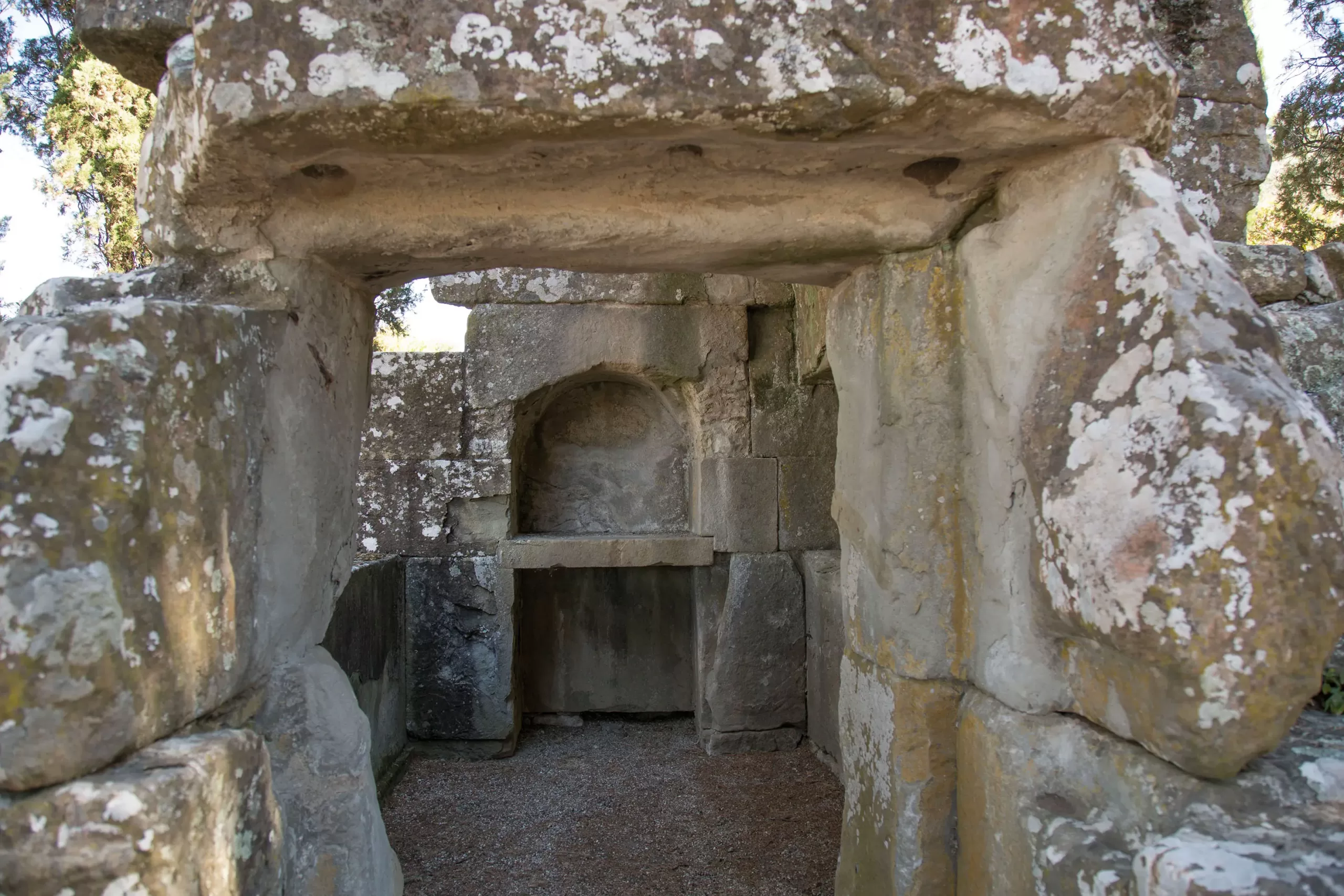
The structure is set on a circular base formed by sandstone slabs resting on the rocky ground; the outer band consists of eight stone blocks of different sizes, placed side by side without the use of mortar. The entrance is formed by a short dromos with a trapezoidal plan, bordered on the sides by the blocks of the base and above by an architrave on which the double-leaf stone door was hinged. The small internal chamber, rectangular in plan, measuring 2.60 m in length and 2.05 m in width, has along the side walls and the back wall a series of niches for the deposition of urns or cinerary jars and, possibly, their respective grave goods. The roofing system consists of a barrel vault formed by five monoliths carefully set next to one another; probably there was an earthen covering recalling the shape of the archaic tumuli of the Sodo.
Information and accessibility
The monuments of the MAEC distributed park can be visited independently.
Please note that the area does not offer routes suitable for visitors with reduced mobility; the ground may be uneven, so comfortable footwear is recommended. There are no water sources along the route.
For information contact the MAEC:
0575 630415
Cultural Itineraries
La Tanella di Pitagora is included in one of the MAEC Cultural Itineraries on izi.TRAVEL.