

Tumulus II of the Sodo
Tumulus II of the Sodo is one of the three “meloni” (the local name for Etruscan tumuli) that mark the plain at the foot of Cortona’s hill. It is an artificial mound, 60 metres in diameter, made of earth and stone, covering two tombs built of pietra serena blocks on the rear side (Tomb 1, the earlier, and Tomb 2, the later).
The front of the mound is distinguished by a spectacular stepped terrace decorated with sculptural groups—lionesses fighting warriors—and architectural elements in the Orientalising style, such as monumental palmettes.
For the Etruscans, art was an integral part of life: a language that united beauty, religion, and power. The sculptures adorning their monuments reflect a refined and international taste, in which the “beauty from the East” merged with local tradition. Lions, palmettes, human figures, and geometric motifs reveal an aesthetic deeply attentive to symbolism and balance, in constant dialogue with Greece and Asia Minor.
Within this context stands Tomb 1 of Tumulus II (c. 580 BC), a monumental architectural project composed of seven chambers with corbelled (pseudo-vaulted) ceilings, now largely collapsed. Access was through an entrance corridor (dromos) and a stone portal with pillars and architrave. At the base of the mound ran a circular stone drum, both structural—counteracting the weight of the mound—and decorative.
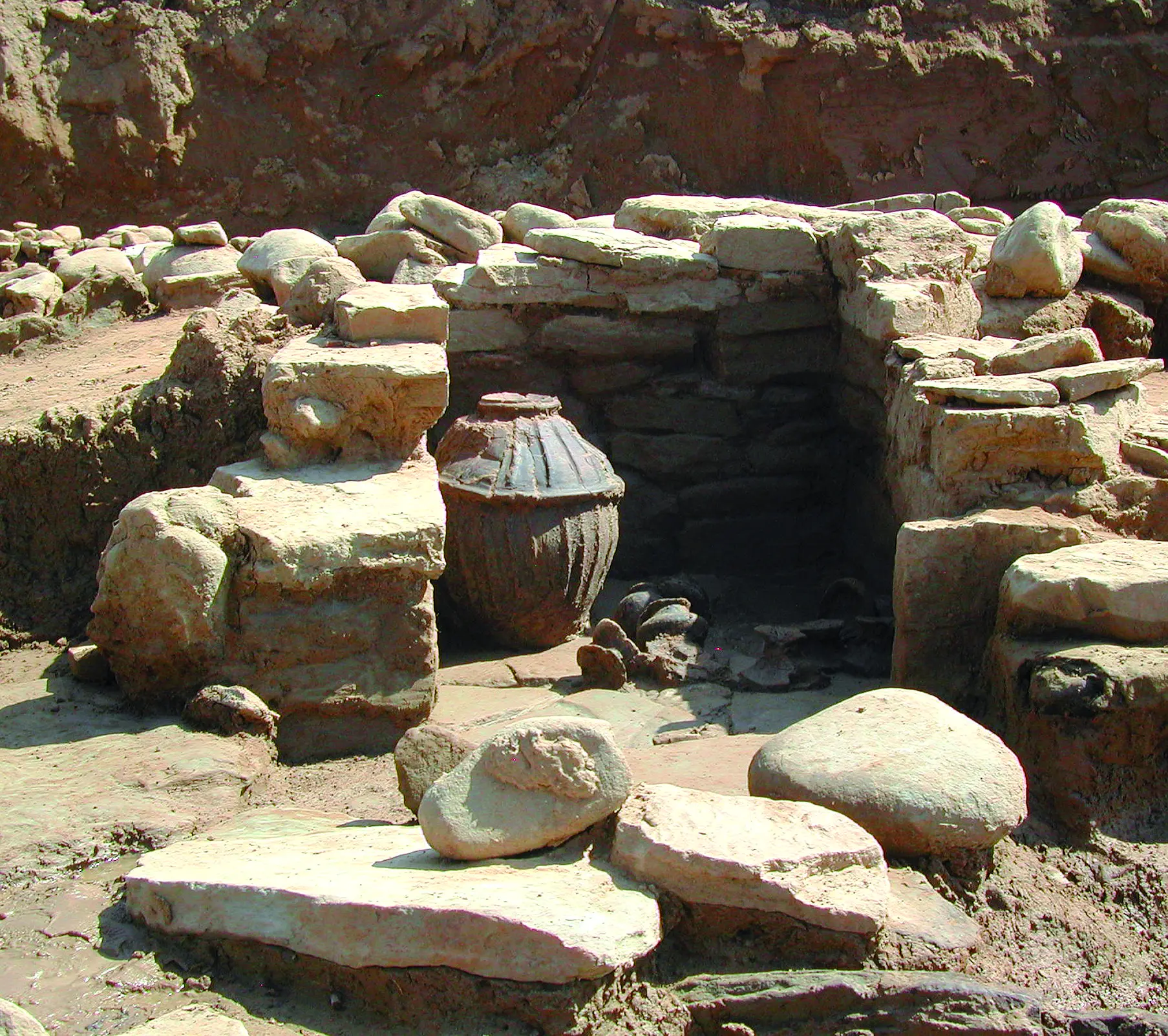
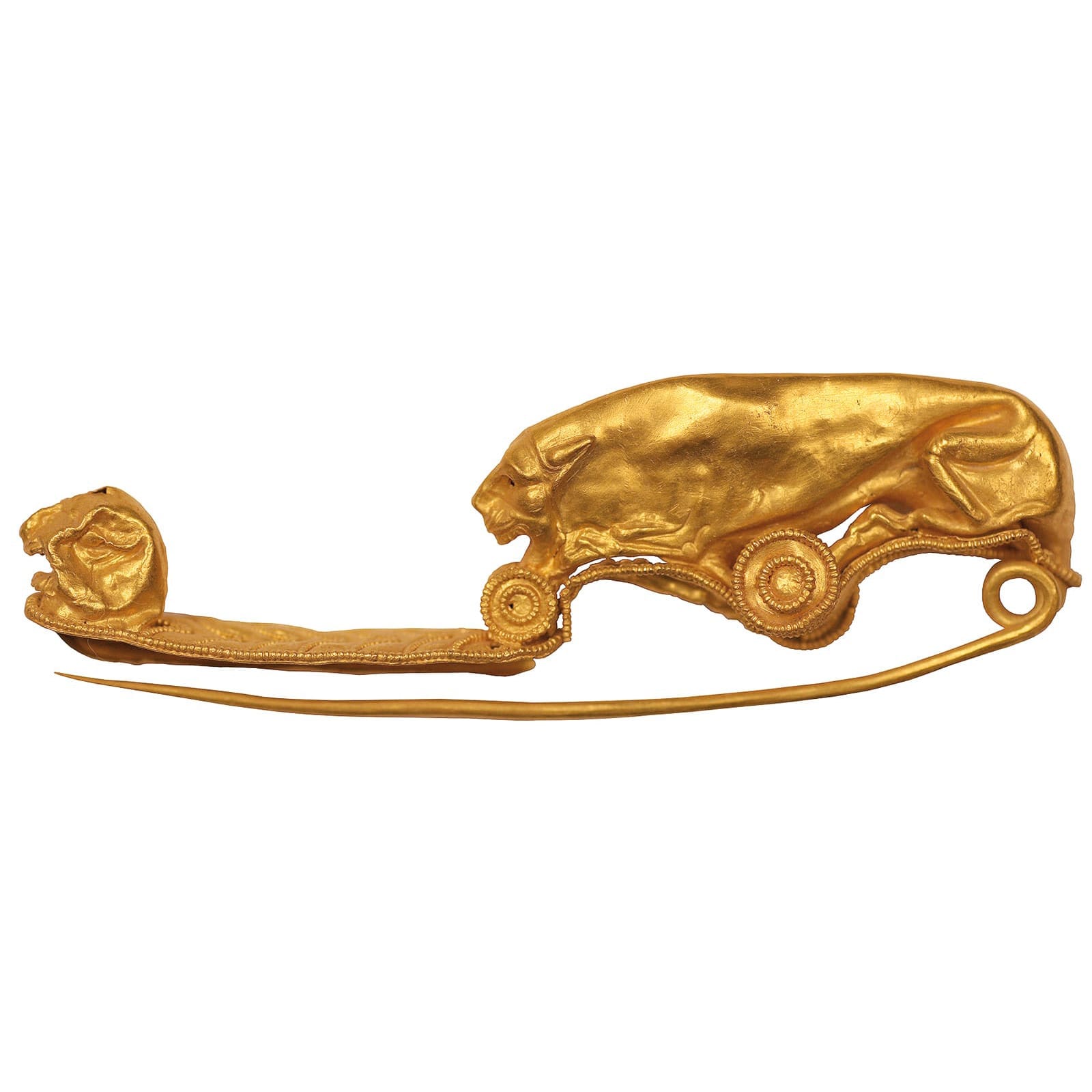
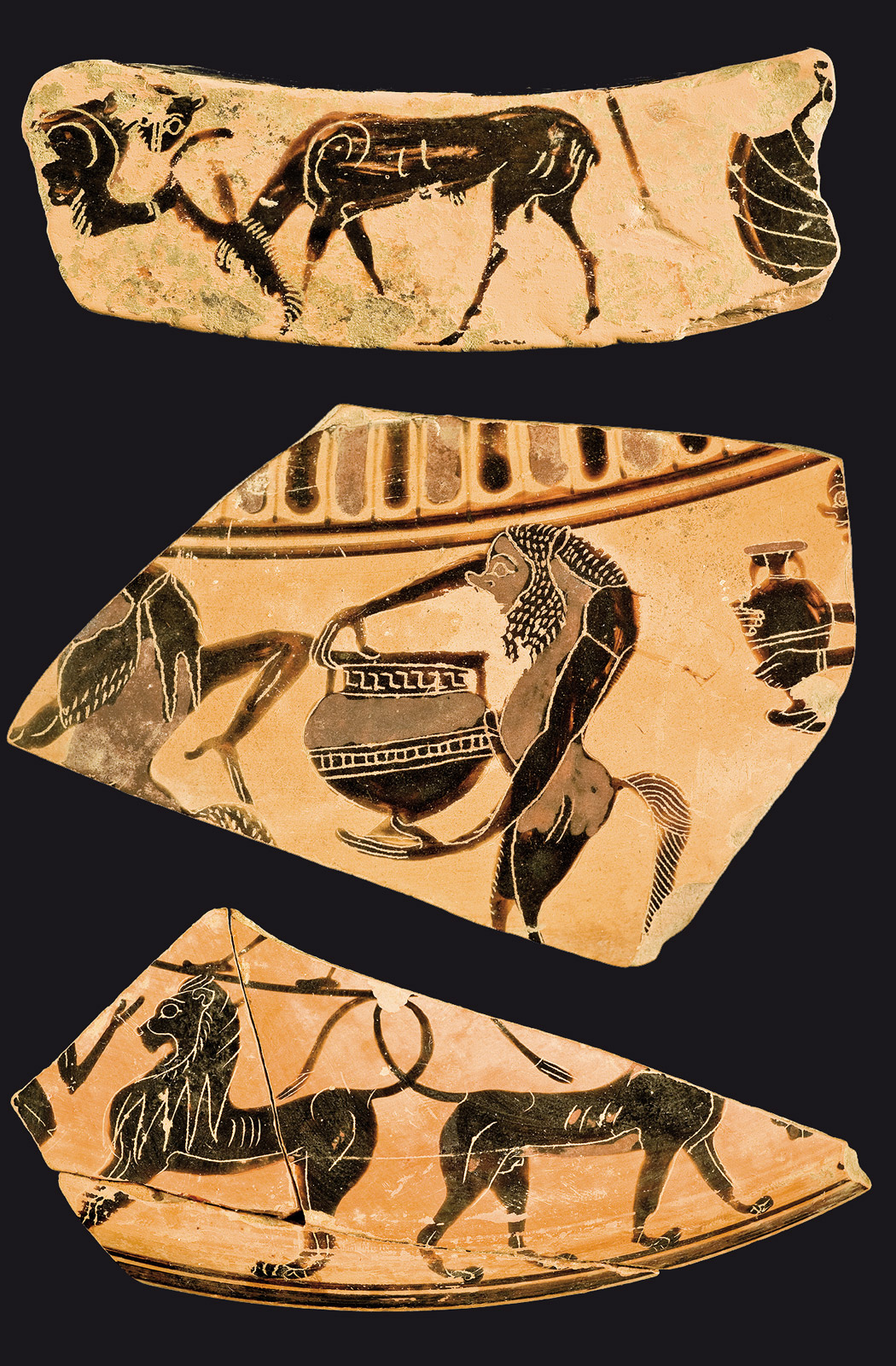
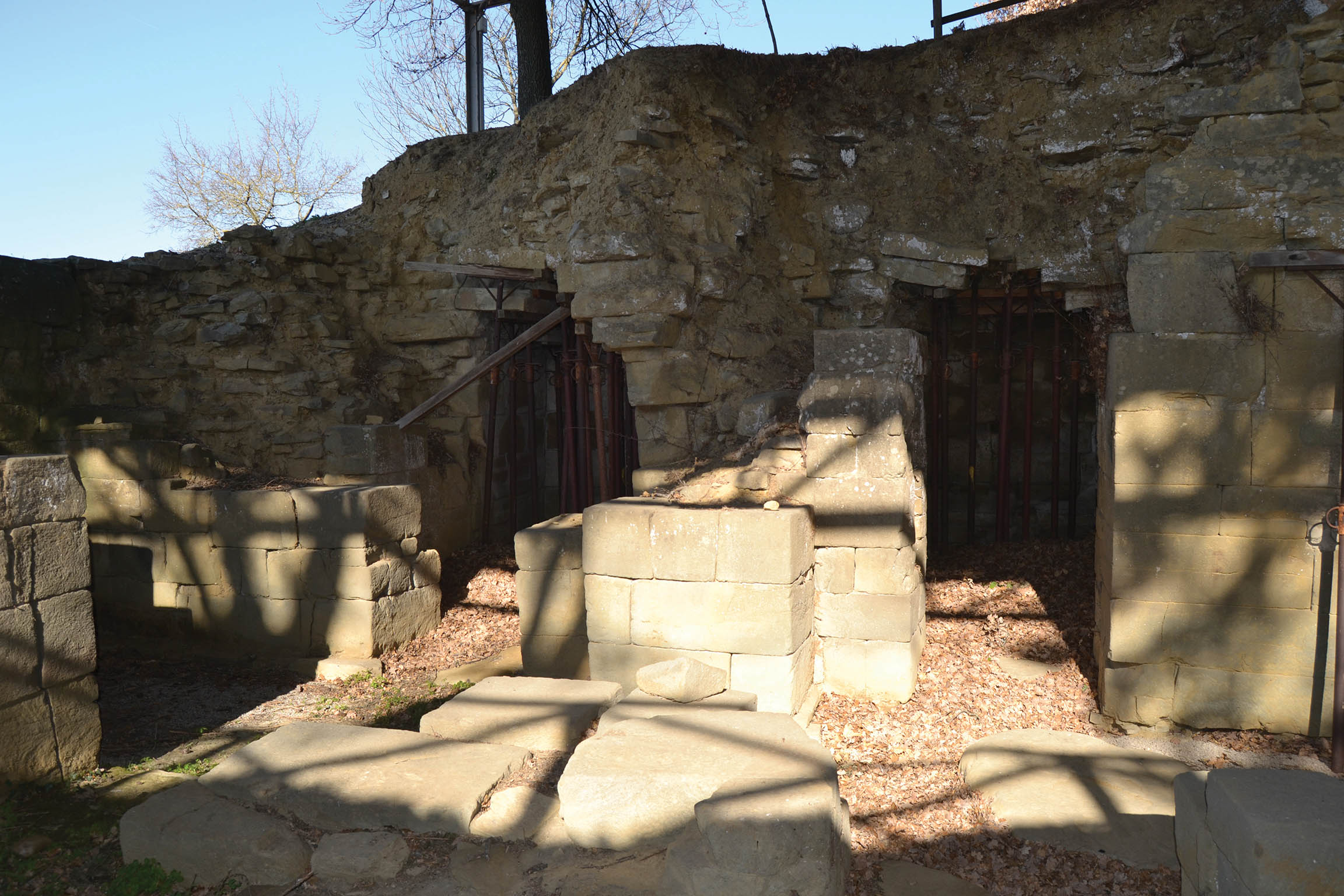
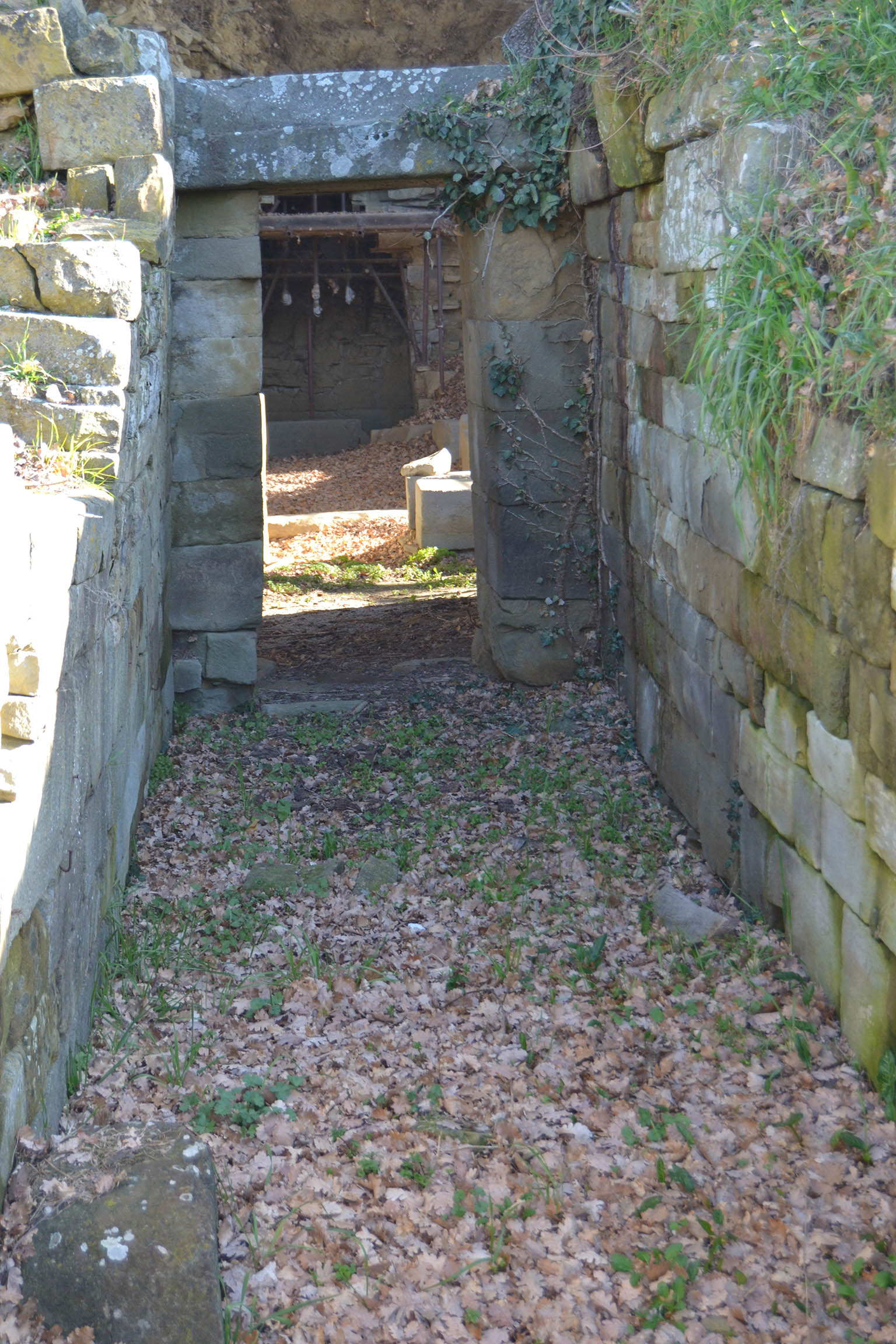
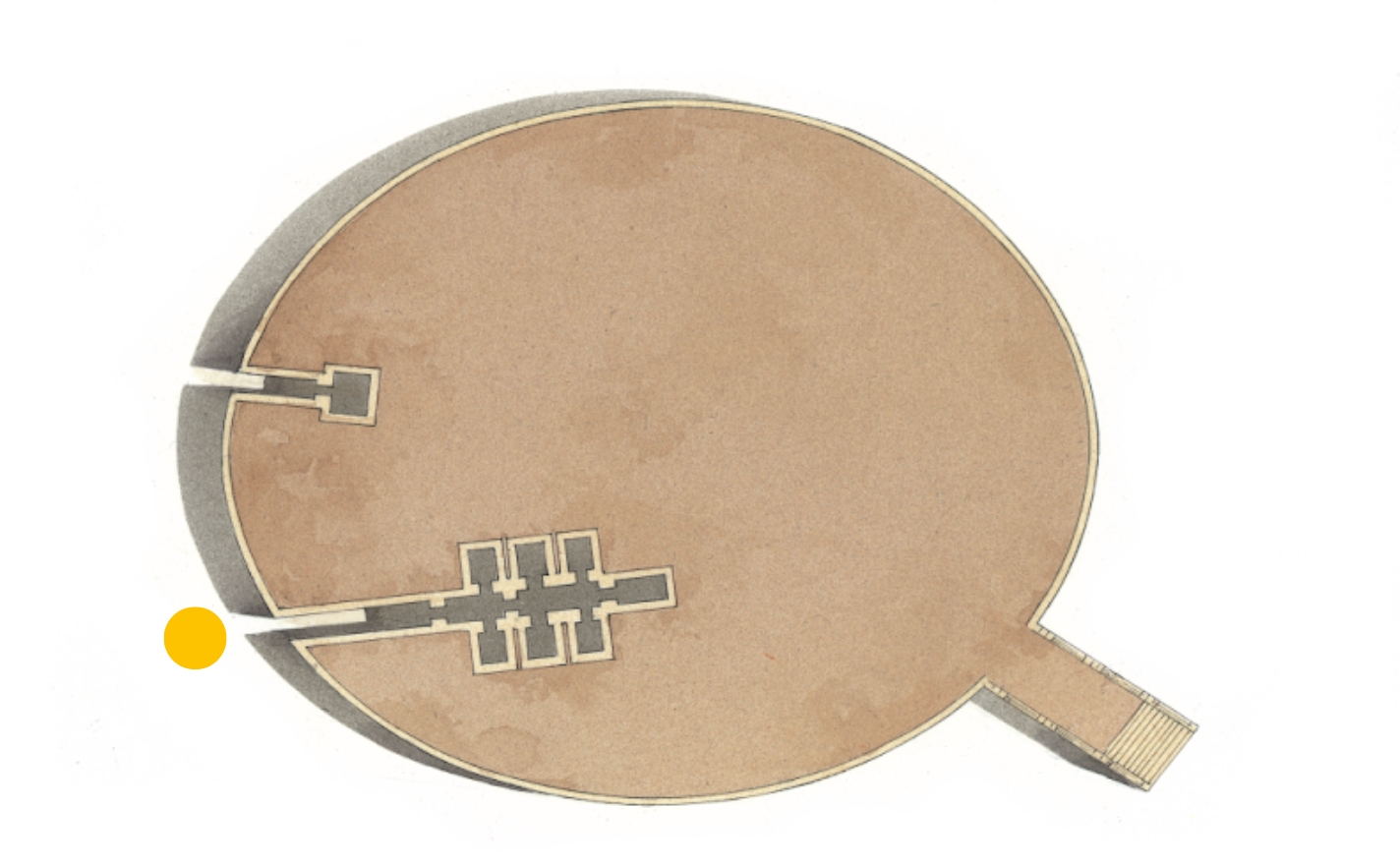
The earliest architectural phase of the monument can be dated to around 580 BC and involved the construction of Tomb 1, composed of seven chambers (six arranged symmetrically in pairs and one at the rear), originally covered by projecting corbelled (pseudo-vaulted) ceilings, now almost entirely collapsed.
Access was through a doorway (no longer preserved) set between two pillars and topped by an architrave, preceded by an entrance corridor (dromos). The complex also included the altar at the rear and a circular belt of stone blocks laid in several courses at the base of the mound (technically known as the drum), serving both a structural function—counteracting the weight of the mound—and a decorative one.
Excavated in the early 20th century, the tomb yielded Attic black-figure vases, ivories, and gold jewellery—evidence of a cultivated and cosmopolitan elite.
These artefacts are now displayed on level -2, in Room 4 of the MAEC – Museo dell’Accademia Etrusca e della Città di Cortona.