

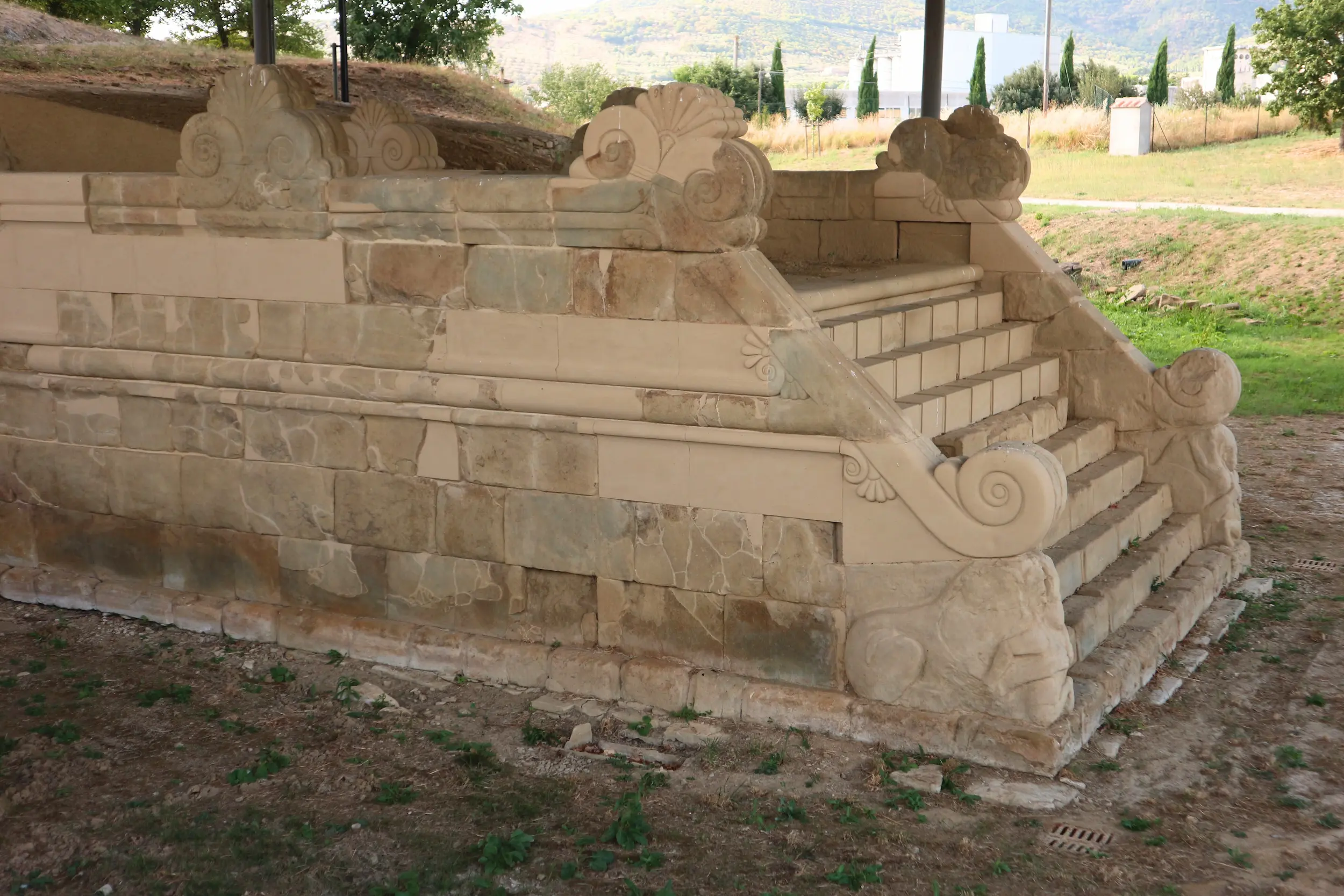
Tumulus II of the Sodo is unique in ancient Etruria: it is the only Etruscan tomb that still preserves in situ a monumental altar decorated with sculptures and ornamental motifs dating to the early 6th century BC.
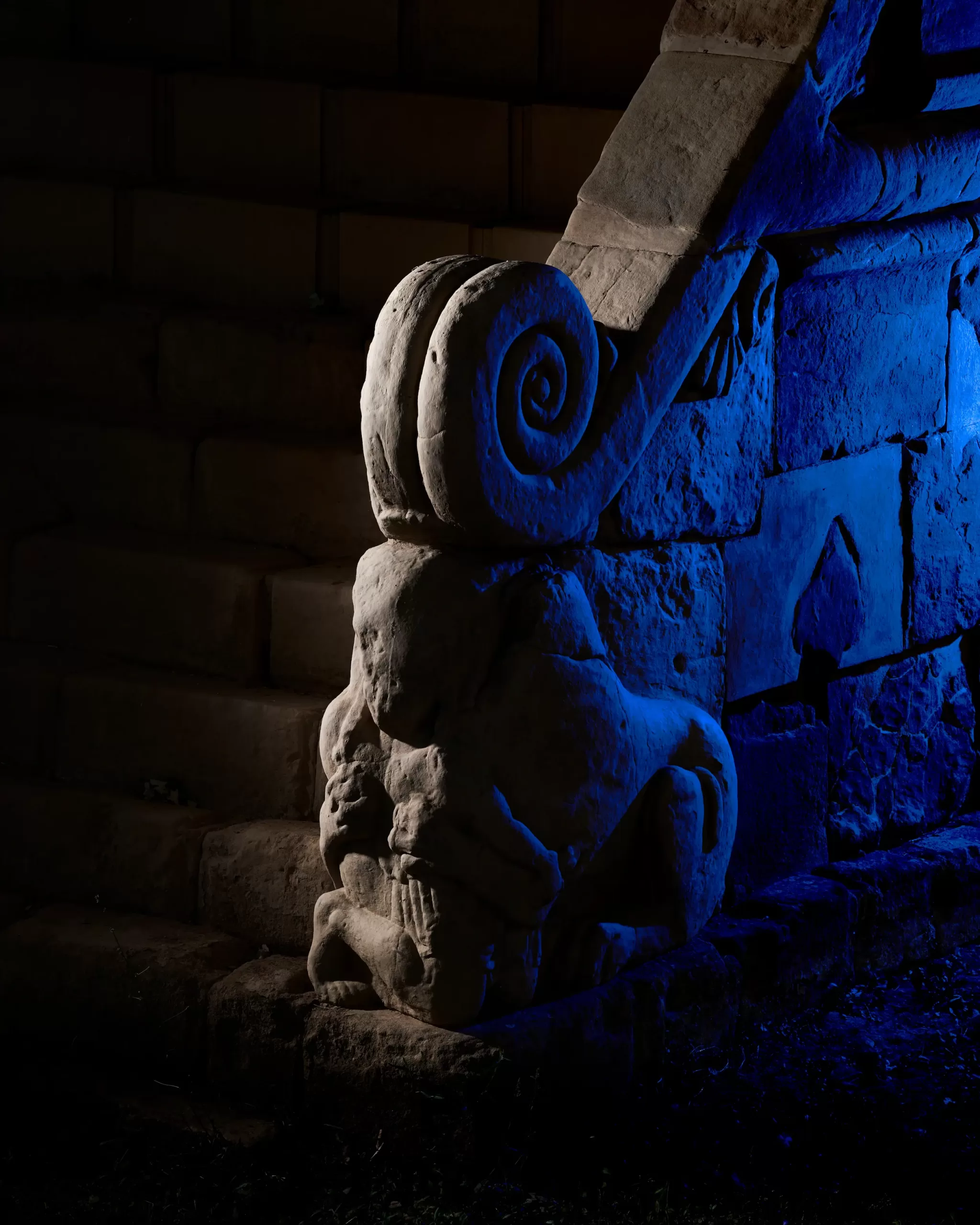
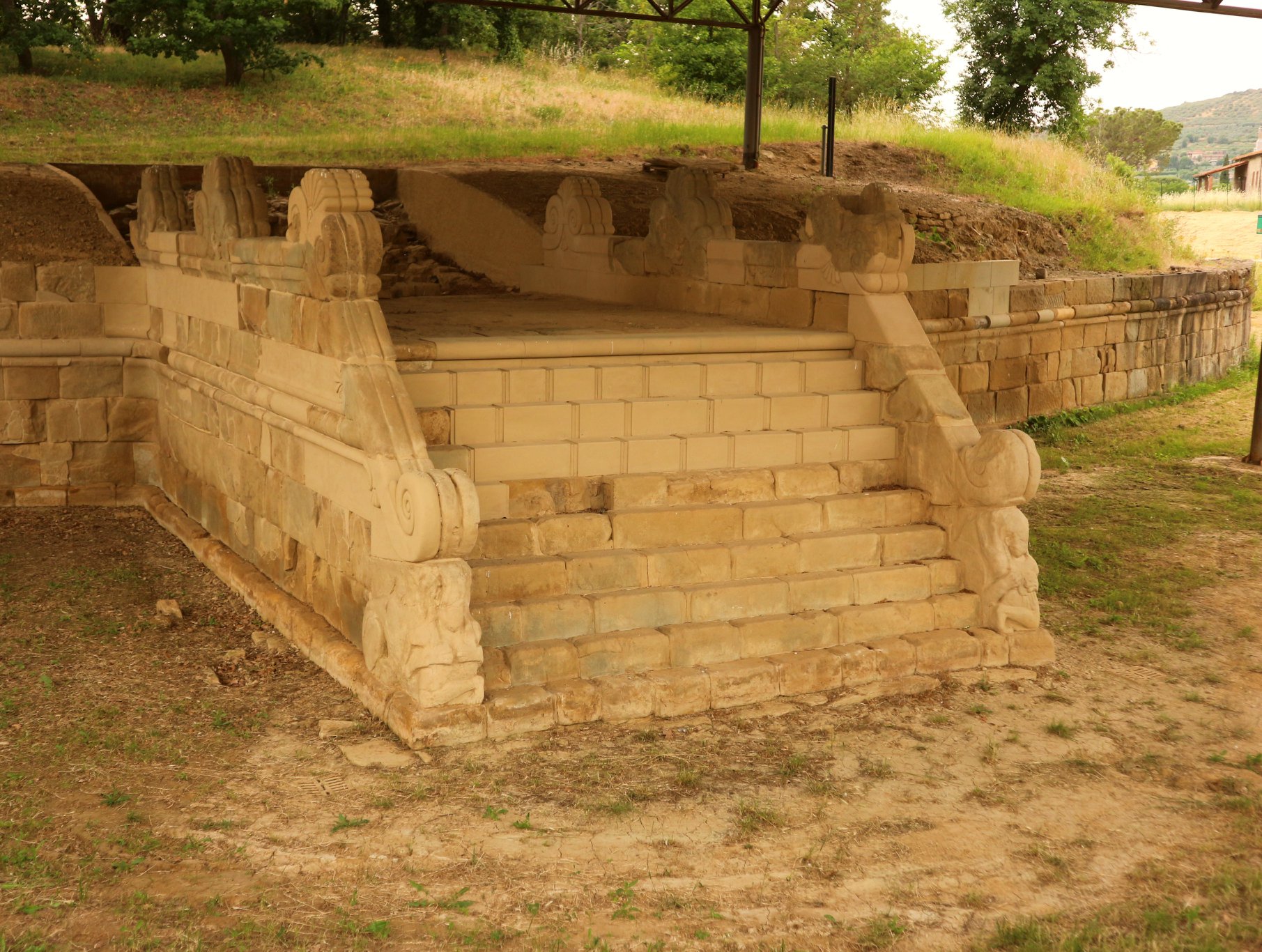
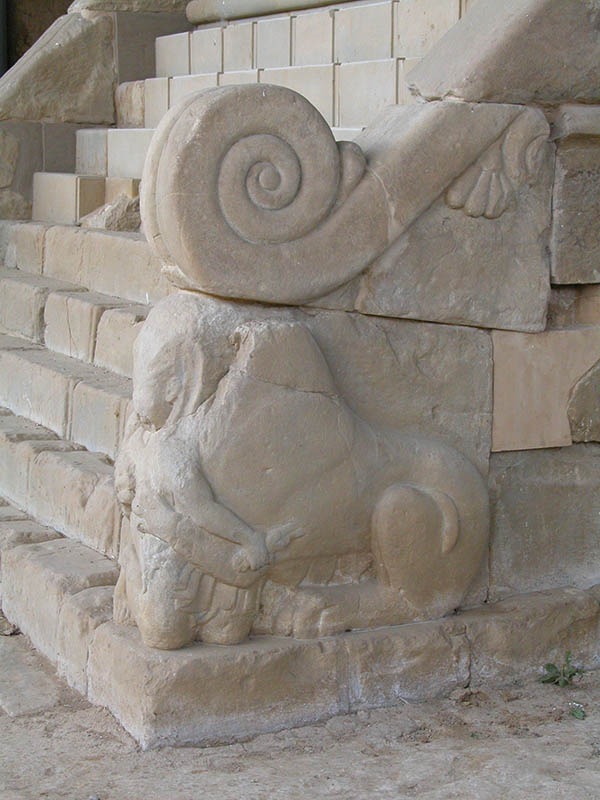
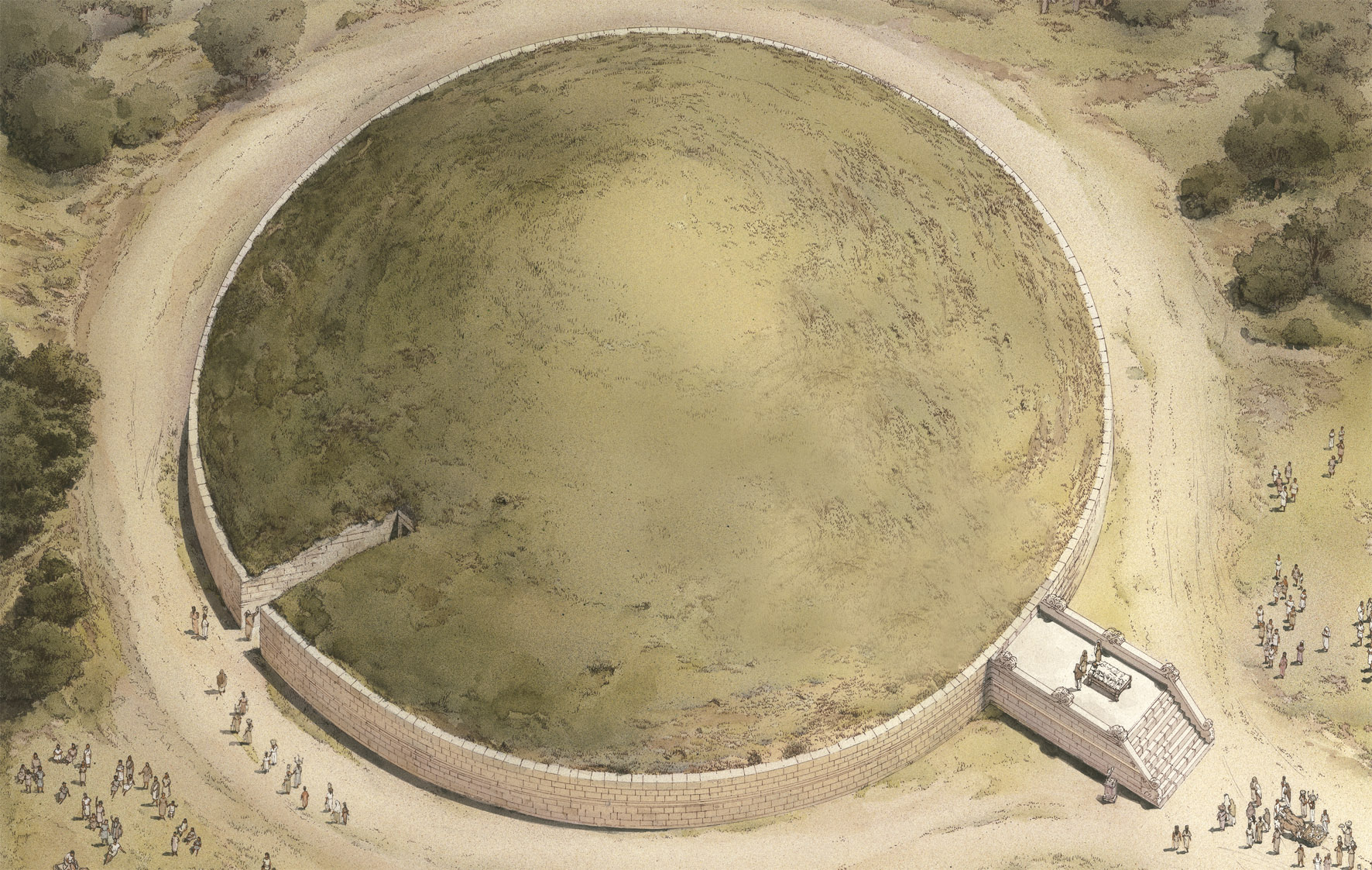
The imposing structure takes the form of a staircase of ten steps with a carved balustrade and an upper platform, where a wooden altar for ritual ceremonies probably once stood. The side walls culminate in two spectacular sculptural groups depicting a struggle between a lioness and a warrior, symbolising the tension between life and death, between the earthly world and the afterlife. The altar was the heart of funerary ceremonies: here the body was laid out and offerings were made to the gods and to the ancestors. The entire complex bears witness to the profound spiritual and social significance of Etruscan cults dedicated to the dead.
The balustrade features a rich and refined decoration of monumental palmettes, while the side panels of the staircase culminate in two imposing sculptural groups depicting a struggle between a lioness and a warrior—perhaps symbolising the conflict and opposition between life and death.
The entire structure, designed for religious ceremonies and ritual practices, was likely used especially during funerary rites, for the laying out of the body and for all the rituals associated with the funeral.
The altar was accessed via a staircase, six of whose nine steps are original. The side panels are composed of carved blocks depicting a struggle between two warriors armed with daggers, attempting to strike the wild beasts that are crushing them. These sculptures most likely symbolise the struggle between life and death.
The lateral facings consist of a first projecting low step, three complete courses of masonry—the third ending in an owl-beak moulding—surmounted by a torus and a further course featuring an inverted owl-beak cornice.
The structure is crowned by three monumental palmettes, one of them set diagonally to connect the parapet with the sculptural group, all linked by moulded elements.
This is the altar with the original sculptural groups, which are now preserved at the MAEC, together with many other artefacts discovered at the site, and are displayed in Room 4 on level -2.
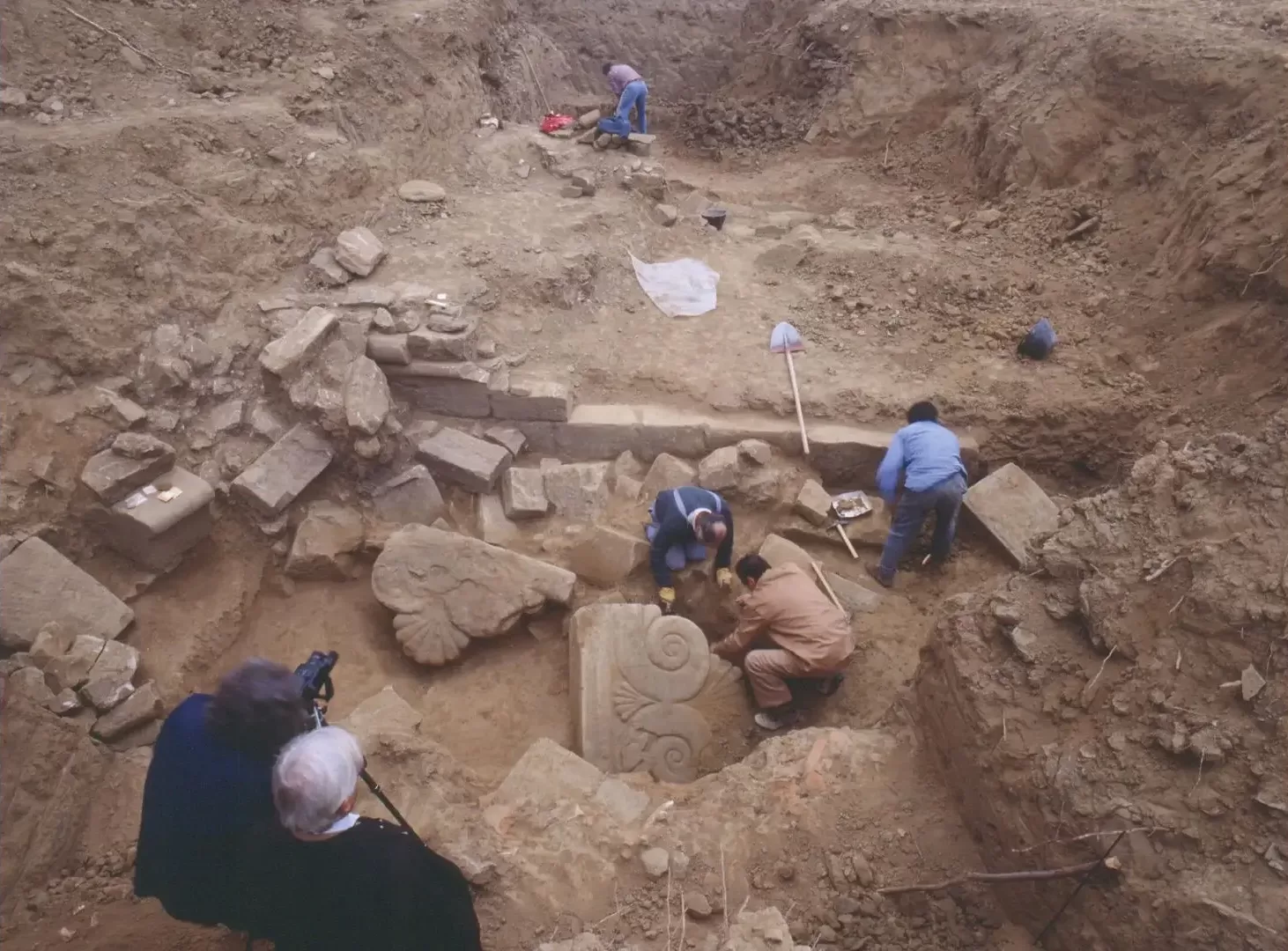
Excavations
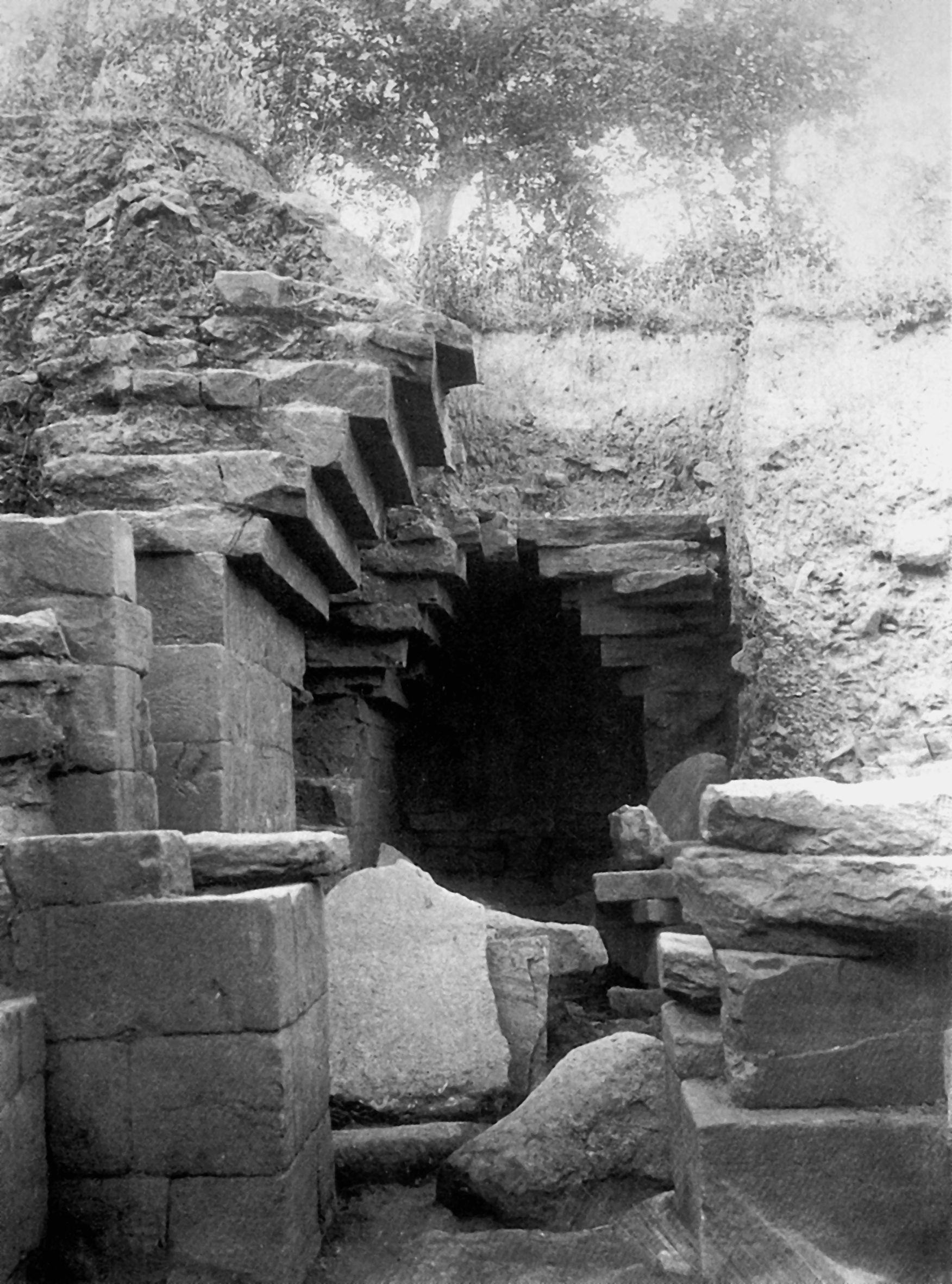
The monumental Etruscan altar for funerary celebrations was discovered in 1990 by the Soprintendenza Archeologica della Toscana. It is the only Etruscan tomb that still preserves in situ an altar with decorated sculptural elements dating to the early 6th century BC. Although Tumulus (or “Melone”) II and one of its burial chambers (Tomb 1) had been known since 1929, excavations begun in 1990 brought to light the great monumental forepart, interpreted as a stair-altar composed of ten steps, a carved lateral balustrade and a wide upper terrace—likely the location of the wooden altar.